


Julien RENOULT
Sélectionnez votre langue


Julien Renoult
Directeur de Recherche CNRSCNRS Senior scientistINSB/INEE Section 28 CNRS - Brain, Behavior & Cognition email: julien[dot]renoult[at$]cefe[dot]cnrs[dot]fr |
|
|
CEFE-CNRS, 1919 route de Mende 34293 Montpellier 5 FRANCE |
Last update: Nov 6th 2025 |
GO DIRECTLY TO: Who am I? / Main research projects / Publications
*****
Research areas
- evolution and diversification of animal color patterns
- evolutionary & computational aesthetics (aesthetic theory of efficient processing applied to artworks, plants and animals)
- processing bias (sparse coding, efficient categorization)
- models of animal vision (colour vision, pattern recognition)
- proximate mechanisms of mate choice
- Methods: Artificial intelligence for neuroscience and evolutionary ecology
Who am I?
I am an evolutionary biologist, cognitive scientist and naturalist. My main objective is to understand how do evolve complex and extravagant visual signals such as the eyespots of the peacock, the danse of the birds of paradise, and some artworks in humans. My research hypothesis is beauty. Using approaches of empirical psychology, computational neuroscience, artificial intelligence and philosophy of aesthetics, my goal is to identify the biological mechanisms underlying the beauty judgment in order to develop mechanistic models that predict this judgement. I then transfer these models to other animals to understand how beauty influences behaviors and, ultimately, the evolution of communication signals in nature.
I am also working on methods to characterize visual phenotypes, with applications in community ecology, evolutionary biology and systematics. I am particularly interested in how to use artificial intellgience to describe visual phenotypes and to model animal vision.
I am also conducting or participating to several research projects in ornithology and ichthyology (fish, and in particular gobies, of the Northeastern Atlantic and the Mediterranean region).
Main research projects
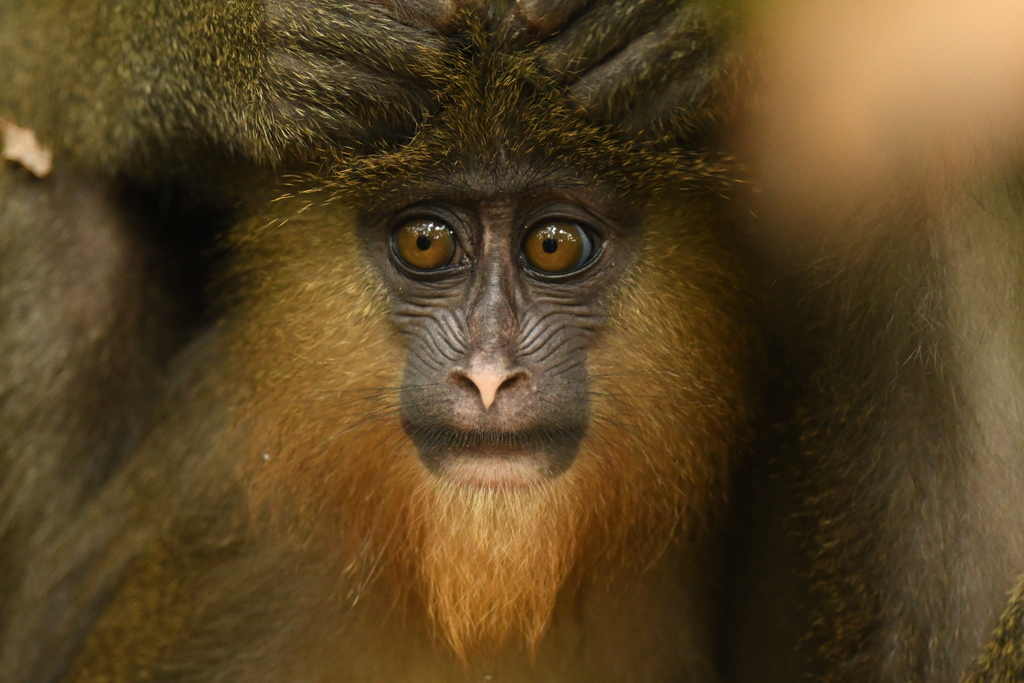
| WildCom-AI (ANR 2020-2025) - Artificial Intelligence for Studying Communication in Wild Animals (PI: J Renoult) |
 |
|
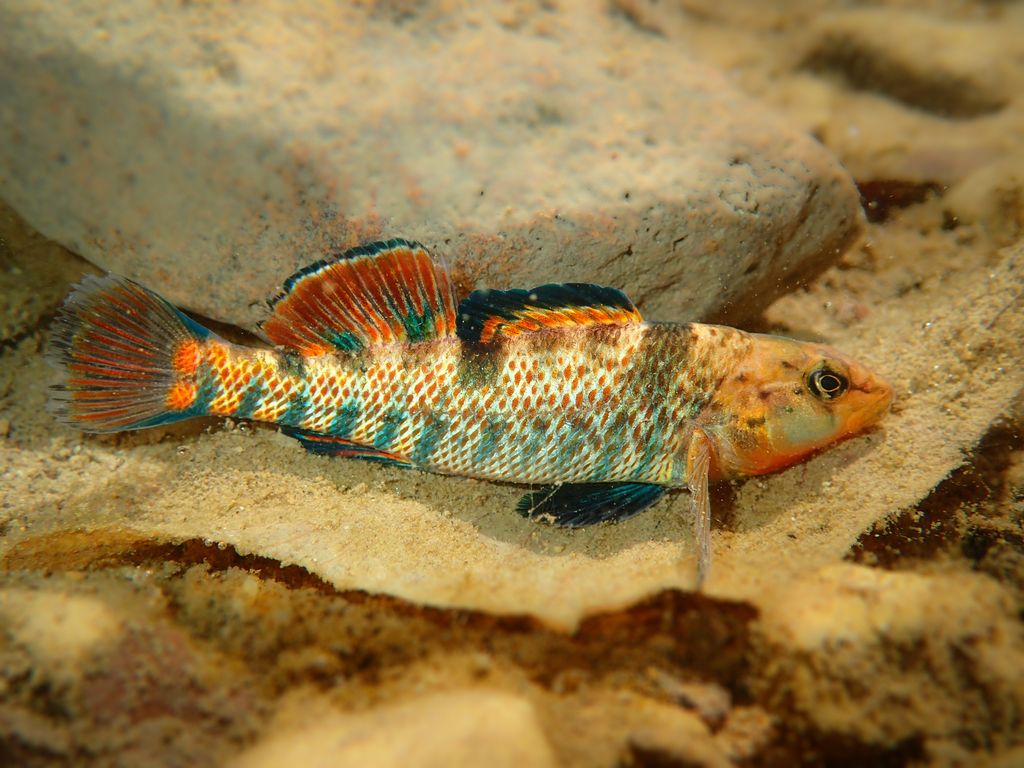
Darters (NSF 2020-2025)- Preferences, information theory, and the evolution of signal design (PI: T Mendelson & J Renoult) |
 |
|
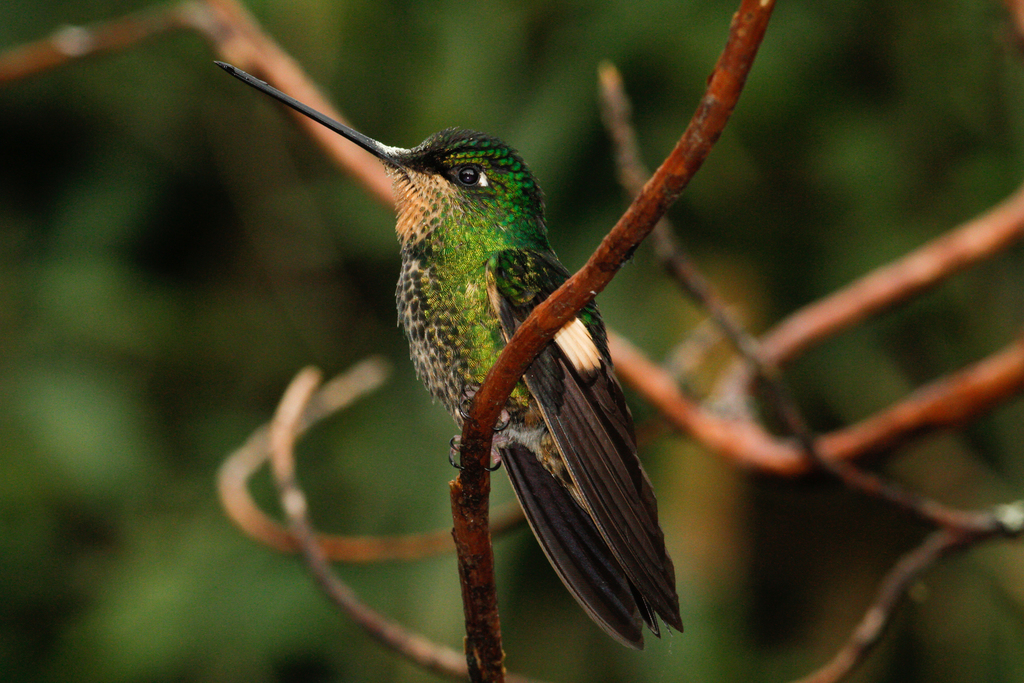
BIRDHABITAT-PATTERN (2025-2026) - AI for studying the role of habitat in the diversification of bird plumage color patterns. With Chris Cooney (Univ Sheffield), Maximilien Servajean (UMR LIRMM) & Jérome Pasquet (UMR TETIS). CNRS programm AISSAI. |
 |
Publications
(* equal contribution)
GO DIRECTLY TO:
Cognitive science/Computational neuroscience/Empirical Aesthetics
Others (mostly phylogenetics, population genetics and natural history)
----------------------------------------------
RENOULT, J. P., KARPINSKI, R., SAUVADET, L., KREYER, M., MBADOUMOU, R., ROURA-TORRES, B., BANIEL, A, CHARPENTIER, M. J. E. (2025). Vision transformers for age prediction from facial images in a wild primate. Methods in Ecology and Evolution. https://doi.org/10.1111/2041-210X.70187
DIBOT, N. M., RENOULT*, J. P., & PUECH*, W. (2025). Generation and Editing of Mandrill Faces: Application to Sex Editing and Assessment. ACM Transactions on Multimedia Computing, Communications and Applications, 21(8), 1-23. [PDF]
SILVA, N.J., FERREIRA, A. C., SILVA, L. R., PERRET, S., TIEO, S., RENOULT, J. P., COVAS, R., DOUTRELANT, C. (2025). A deep learning approach to detect and visualise sexual dimorphism in monomorphic species. Animal Behaviour. 25: 123223.
ARIAS, M., BEHRENDT, L., DRESSLER, L., RAKA, A., PERRIER, C., ELIAS, M., GOMEZ, D., RENOULT, J.P., TEDORE, C. (2024). Testing the equivalency of human “predators” and deep neural networks in the detection of cryptic moths. Journal of Evolutionary Biology. 38, 214-224. https://doi.org/10.1093/jeb/voae146
HÉJJA-BRICHARD, Y. H., RAYMOND, M., CUTHILL, I. C., MENDELSON, T. C., & RENOULT, J. P. From natural to sexual selection: Revealing a hidden preference for camouflage patterns. bioRxiv, https://doi.org/10.1101/2023.09.27.559753
HÉJJA-BRICHARD, Y., MILLION, K., RENOULT, J. P.*, & MENDELSON, T. C.* (2024). Using neural style transfer to study the evolution of animal signal design: A case study in an ornamented fish. Ecological Informatics, https://doi.org/10.1016/j.ecoinf.2024.102881
HEJJA-BRICHARD, Y., RENOULT, J., & MENDELSON, T. (2024). Comparative analysis reveals assortative mate preferences in darters independent of sympatry and sex. Ecology & Evolution. 14(10), e11498.
TIEO, S., DEZEURE, J., CRYER, A., LEPOU, P., CHARPENTIER, M. J., & RENOULT, J. P. (2023). Social and sexual consequences of facial femininity in a non-human primate. Iscience, 26(10).
BYBEE, S.M., FUTAHASHI, R., RENOULT, J.P., SHARKEY, C., SIMON, S., SUVOROV, A., WELLENREUTHER, M. (2023). Transcriptomic insights into Odonata ecology and evolution. In Dragonflies and Damselflies, 2nd Ed. (CORDOBA-AGUILA, A., BEALTY, C.D., BRIED, J.T.). Oxford University Press. [Book chapter] [PDF]
CHARPENTIER, M.J.E, POIROTTE, C., ROURA-TORRES, B., AMBLARD-RAMBERT, P., WILLAUME, E., KAPPELER, P.M., ROUSSET, F., RENOULT, J.P. (2022) Mandrill mothers associate with infants who look like their own offspring using phenotype matching. Elife. 11, e79417
LANGLOIS, J., GUILHAUMON, F., BALETAUD, F., CASAJUS, N., […], RENOULT, J.P., […], MOUQUET, N. (2022). Global mismatch between the aesthetic value of reef fishes and their conservation priorities. Plos Biology. 20(6):e3001640.
HULSE S.V., RENOULT, J.P., MENDELSON T.M. (2022). Using deep neural networks to model similarity between visual patterns: application to fish sexual signals. Ecological Informatics. 67:101486 [PDF]
CHARPENTIER M.J., HARTE M., POIROTTE C., DE BELLEFON J.M., LAUBI B., KAPPELER P.M., RENOULT J.P. (2020). Same father, same face: deep-learning reveals paternally-derived signalling of kinship in a wild primate. Science Advances. 6, eaba3274. [PDF]
DUFOUR P., GUERRA CARANDE J., RENAUD J., RENOULT J.P., LAVERGNE S., CROCHET P.-A. (2020). Plumage colouration in gulls responds to their non-breeding climatic niche. Global Ecology and Biogeography. 29: 1704-1715. [PDF]
JOFFARD N., LE RONCE I., LANGLOIS A., RENOULT J.P., BUATOIS B., DORMONT L., & SCHATZ B. (2020). Floral trait differentiation in Anacamptis coriophora: phenotypic selection on scents, but not on colour. Journal of Evolutionary Biology. 33: 1028-1038.
BLIARD L., PAQUET M., ROBERT A., DUFOUR P., RENOULT J.P., GREGOIRE A., CROCHET P.-A., COVAS R., DOUTRELANT C. (2020). Examining the link between relaxed predation and bird colouration on islands. Biology Letters. 16: 20200002.
FERREIRA A.C., SILVA L.R., RENNA F., BRANDL H.B., RENOULT J.P., FARINE D.R., COVAS R., DOUTRELANT C. (2020). Deep learning-based methods for individual recognition in small birds. Methods in Ecology & Evolution. 11: 1072-1085.
DE SOLAN T., RENOULT J.P., GENIEZ P., DAVID P., & Crochet P.A. (2020). Looking for mimicry in a snake assemblage using deep learning. The American Naturalist. 196: 74-86. [PDF]
HULSE S.V., MENDELSON T.C.*, RENOULT J.P.*. (2020). Sexual signals of fish species mimic the spatial statistics of their habitat: evidence for processing bias in animal signal evolution. Nature Communications. 11: 1-8. [
RENOULT J.P., KELBER A., SCHAEFER H.M. (2017). Colour spaces in ecology and evolutionary biology. Biological Reviews. doi: 10.1111/brv.12230 [PDF]
BINKENSTEIN J., STANG M., RENOULT J.P., SCHAEFER H.M. (2017). Weak correlation of flower color and nectar-tube depth in temperate grassland. Journal of Plant Ecology. 10 : 397-405
DOUTRELANT C., PAQUET M., RENOULT J.P., GREGOIRE A., CROCHET P.-A., COVAS R. (2016). Worldwide patterns of bird colouration on islands. Ecology Letters. 19: 537-545.
RENOULT J.P., VALEUR B. (2015). Les couleurs de la vie – Mécanismes de production, fonctions et diversité. L’Actualité Chimique. 397-398 : 12-18.
RENOULT J.P., BLÜTHGEN N., BINKENSTEIN J., WEINER C.N., WERNER M., SCHAEFER H.M. 2015. Linking community to sensory ecology: the relative importance of color signaling for plant generalization in pollination networks. Oikos. 124: 347-354. [PDF]
RENOULT J.P., VALIDO P., JORDANO P., SCHAEFER M. (2014). Adaptation of flower and fruit colours to diversified mutualists. New Phytologist. 201: 678-686. [PDF]
RENOULT J.P., THOMANN M., SCHAEFER H.M., CHEPTOU P.-O. (2013). Selection on quantitative colour variation in Centaurea cyanus: the role of the pollinator’s visual system. Journal of Evolutionary Biology. 26: 2415-2427.
RENOULT J.P., COURTIOL A., SCHAEFER H.M. (2013). A novel framework to study colour signaling to multiple species. Functional Ecology. 27: 718-729. [PDF]
BINKENSTEIN J., RENOULT J.P., SCHAEFER H.M. (2013). Increasing land-use intensity decreases floral colour diversity and changes composition of plant communities in temperate grasslands. Oecologia, 173: 461-471.
RENOULT J.P., SCHAEFER H.M., SALLE B., CHARPENTIER M.J.E. (2011). The evolution of the multicoloured face of mandrills: insights from the perceptual space of colour vision. PlosOne, 6:e29117.
SCHATZ, B., DELLE-VEDOVE, R., RENOULT, J., et al. (2011). Couleur de fleur d’orchidées et insectes. Le Courrier de la Nature. 260 : 24-36.
RENOULT J.P, COURTIOL A., KJELLBERG F. (2010). When assumptions on visual system evolution matter: nestling colouration and parental visual performance in birds. Journal of Evolutionary Biology. 23:220-226
Cognitive science/Computational neuroscience/Empirical Aesthetics
MENDELSON, T. C.*, RENOULT, J. P.*, ROSENTHAL, G., SHUKER, D. On the biological basis of beauty. (2025) Biological Review. [PDF]
TIEO, S., BARDIN, M., BERTIN-JOHANNET, R., DIBOT, N., MENDELSON, T. C., PUECH, W., & RENOULT, J. P. (2024). Comparing activation typicality and sparsity in a deep CNN to predict facial beauty. Computational Brain & Behavior [PDF]
DIBOT, N. M., TIEO, S., MENDELSON, T. C., PUECH, W., & RENOULT, J. P. (2023). Sparsity in an artificial neural network predicts beauty: Towards a model of processing-based aesthetics. PLOS Computational Biology, 19(12), e1011703 [PDF]
TIEO, S., RESTREPO-ORTIZ, C. X., ROURA-TORRES, B., SAUVADET, L., HARTÉ, M., CHARPENTIER, M. J., & RENOULT, J. P. (2023). The Mandrillus Face Database: A portrait image database for individual and sex recognition, and age prediction in a non-human primate. Data in Brief, 47, 108939.
BELTZUNG, B., PELE, M., RENOULT, J.P., SUEUR, C. (2023). Deep learning for studying drawing behavior: A review. Frontiers in Psychology. 14: 992541.
BELTZUNG, B., PELE, M., RENOULT, J.P., SUEUR, C. (2022). Using artificial intelligence to analyze non-human drawings: A first step with Orangutan productions. Animals. 12(20): 2761. [PDF]
RENOULT, J.P. (2022). La Fluence, in Abécédaire de la beauté (éditeurs: ZERNIK, C. & JARICOT, J.). Editions B42. [Book chapter]
CHARPENTIER, M. J., PELÉ, M., RENOULT, J.P., SUEUR, C. (2021). Social data collection and analyses, in Demographic Methods Across the Tree of Life (ed. Salguero-Gomez, R., Gamelon, M.), pp.53-76 [Book chapter].
RENOULT J.P. (2019). Book review of "The Aesthetic Animal." Evolutionary Studies in Imaginative Culture. 3: 105-108. [PDF]
RENOULT J.P., GUYL B., MENDELSON T.C., PERCHER A., DORIGNAC J., GENIET F., MOLINO F. (2019). Modelling the Perception of Colour Patterns in Vertebrates with HMAX. bioRxiv, 552307.
HOLZLEITNER I.J., LEE A.J., HAHN A.C., KANDRIK M., BOVET J., RENOULT J.P., ... & JONES B.C. (2019). Comparing theory-driven and data-driven attractiveness models using images of real women’s faces. Journal of Experimental Psychology: Human Perception and Performance. 45: 1589.
RENOULT J.P., MENDELSON T.C. (2019). Processing bias: extending sensory drive to include efficacy and efficiency in information processing. Proceedings of the Royal Society B, 286: 20190165.
KAPOULA Z., VOLLE E., RENOULT J.P., ANDREATTA M. (ed.). (2018). Exploring Transdisciplinarity in Art and Sciences. Springer [Edited book].
RENOULT J.P. (2016). The evolution of aesthetics: a review of models. In Aesthetics and Neuroscience: Scientific and Artistic Perspectives, (KAPOULA Z. & VERNET M, ed.). pp. 271-300. Springer International Publishing. [Book chapter].
RENOULT J.P., BOVET J., RAYMOND M. (2016). Beauty is in the efficient coding of the beholder. Royal Society Open Science. DOI: 10.1098/rsos.160027. [PDF]
CHARPENTIER M.J.E., HUCHARD E., GIMENEZ, O., SALLE, B., KAPPELER P., RENOULT J.P. (2012). Distribution of affiliative behavior across kin classes and their fitness consequences in mandrills. Ethology, 118: 1198-1207.
KOVAČIĆ, M., SVENSEN, R., RENOULT, J. P., PATZNER, R. (2025). Checklist, key and latitudinal distribution of the eastern Atlantic marine gobies along the European coast (Actinopterygii: Gobiidae and Oxudercidae). Zootaxa. Zootaxa 5609 (1), 1-28.
KOVAČIĆ, M., BERGENGER, L., RENOULT, J. P. (2024). Testing of the taxonomic diagnosis of Zebrus pallaoroi Kovačić, Šanda & Vukić, 2021 (Actinopteri: Gobiiformes: Gobiidae) on a large sample from the Western Mediterranean. Fishes. 9, 511. [PDF]
MUCCIOLO, S., DESIDERATO, A., CHRISTIDIS, G., AMMAR, I. A., & ANTIT, M., ..., RENOULT, J.P., …, GEROVASILEIOU, V. (2024). New records of introduced species in the Mediterranean (August 2024). Mediterranean Marine Science, 25(2).
DIGENIS, M., AKYOL, O., BENOIT, L., BIEL-CABANELAS, M., ÇAMLIK, Ö. Y., CHARALAMPOUS, K., ... RENOULT, J.P., & GEROVASILEIOU, V. (2024). New records of rarely reported species in the Mediterranean Sea (March 2024). Mediterranean Marine Science, 25(1), 84-115. [PDF]
KOVACIC, M., ŠANDA, R., VUKIC, J., RENOULT, J. P., & FALZON, M.-A. (2023). New records of the recently described Pomatoschistus nanus Engin & Seyhan, 2017 (Teleostei: Gobiidae) (early view). Cybium. [PDF]
RENOULT, J., MENUT, T., RUFRAY, X., LE BRIS, S., IGLESIAS, S. P., LOUISY, P., ... & PRAT, M. (2023). Les poissons cryptobenthiques de la baie d’Agay (Var). Cahiers de la Fondation Biotope, 39, 58 pages.
KOVAČIĆ, M., RENOULT, J. P., PILLON, R., BILECENOGLU, M., TIRALONGO, F., BOGORODSKY, S. V., ... & YOKES, M. B. (2023). The delimitation of geographic distributions of Gobius bucchichi and Gobius incognitus (teleostei: Gobiidae). Journal of Marine Science and Engineering, 11(3), 516. [PDF]
KOVAČIĆ, M., PILLON, R., RENOULT, J.P. (2022). Identification of enigmatic Mediterranean fish Gobius ater Bellotti, 1988 (Teleostei: Gobiidae) based on morphology from underwater photographs. Journal of Fish Biology, 101: 1381-1384 [PDF]
RENOULT, J.P., PILLON, R., KOVAČIĆ, M., LOUISY, P. (2022). Frontiers in Fishwatching Series: Gobies of the Northestern Atlantic and the Mediterranean – Gobius and Thorogobius. Les cahiers de la fondation Biotope. 237 pages.
KOVAČIĆ, M., RENOULT, J.P., PILLON, R., SVENSEN, R., BOGORODSKY, S., ENGEN, S., LOUISY, P. (2022). Identification of Mediterranean marine gobies (Actinopterygii: Gobiidae) of continental shelf from photographs of in situ individuals. Zootaxa. 5144: 1-103.
IGLESIAS, S. P., BARICHE, M.., …, RENOULT, J.P., …, TOURNIER-BROER, R. (2021). French ichthyological records for 2019. Cybium. 45: 169-188.
SANTIN A., AGUILAR R., …, RENOULT J.P., …, TIRALONGO, F. (2021) New records of rare species in the Mediterranean Sea (March 2021). Mediterranean Marine Science, 22: 199-217.
IGLESIAS S. P., BERGOT P., …, RENOULT J.P., …, THOMAS W. (2020). French ichthyological records for 2018. Cybium. 44: 285-307.
Others (mostly phylogenetics, population genetics and natural history)
ROCHAS, P., MINOT, M., MEZIERE, N., RENOULT J.P., JUILLERAT, N., URIOT, Q., URIOT, S., FOXONET, H., CERDAN, A. (2022). Check-list of Odonata from French Guiana with notes on their distribution, ecology, and new state records. Odonatologica, 51(3/4) : 175-224.
RENOULT J.P., DELAHAIE B., DELATTRE J-C., DE FRANCESCHI C. , VEYRUNES F., LE BOT T. (2018). Chumming on multi-day sailing trip in Bay of Biscay. Dutch Birding 40:96-98
CROCHET P.-A., LEBLOIS R., RENOULT J.P. (2015). New reptile records from Morocco and Western Sahara. Herpetology Notes. 8 : 583-588.
RENOULT, J.P. Arrivée de la Libellule purpurine Trithemis annulata (De Palisot de Beauvois, 1805) dans la vallée du Rhône. (2013). Sympetrum. 17: 81-82.
DURANT, E., RENOULT, J.P.(2012). Addition à l’odonatofaune de l’Adrar mauritanien. Poiretia, 2012, 4 : 7-16.
CHARPENTIER M.J.E., FONTAINE M.C., CHEREL E., RENOULT J.P., JENKINS T., BENOIT L., BARTHES N., ALBERTS SC, TUNG J. (2012). Genetic structure in a dynamic baboon hybrid zone corroborates behavioral observations in a hybrid population. Molecular Ecology, 21:715-731.
RENOULT J.P., GENIEZ P., BEDDEK M., CROCHET P.-A. (2010). An isolated population of Podarcis vaucheri (Sauria: Lacertidae) in south-eastern Spain: genetic data suggest human-mediated range expansion. Amphibia-Reptilia, 31:287-296.
KJELLEBERG F., BAKOLIMALALA R., EDMOND R., RAFIDISON V., RABEVOHITRA R., RENOULT J., et. al. (2010). Corridors de végétation et conservation d'un groupe clé de voûte de la biodiversité au centre d'un réseau d'interactions: le cas des Ficus et des communautés associées. in Connaissance et Gestion des Milieux Tropicaux. p80-91. CNRS Edition. [Chapitre de livre].
RENOULT J.P., GENIEZ P, BACQUET P., GUILLAUME C. P., CROCHET P.-A. (2010). Systematics of the Podarcis hispanicus-complex (Sauria, Lacertidae) II: the valid name of the north-eastern Spanish form. Zootaxa, 2500:58-68
RENOULT J. (2009). The Sooty Gull, Larus hemprichii (Aves; Laridae), on Nosy Ve: first records for Madagascar. Malagasy Nature, 2:174-176.
RENOULT J.P., GENIEZ P, BACQUET P., BENOIT L., CROCHET P.-A. (2009). Morphology and nuclear markers reveal extensive mitochondrial introgressions in the Iberian Wall Lizard species complex. Molecular Ecology. 18:4298-4315.
RENOULT J.P., KJELLBERG F., SANTONI S., KHADARI B. (2009). Cyto-nuclear discordance in the phylogeny of Ficus section Galoglychia and host shifts in plant-pollinator associations. BMC Evolutionary Biology. 9:248.
RENOULT J.P. & RASELIMANANA A.P. (2009). A new species of Malagasy blind snake of the genus Typhlops Oppel (Serpentes: Typhlopidae). Zootaxa, 2290:65-68
CROCHET P.-A., RENOULT J. (2008). Tarentola annularis annularis (Geoffroy de Saint-Hilaire, 1827) preying on a mammal. Herpetology Notes, 1:58-59.
Doris Gomez
DORIS GOMEZ
CNRS RESEARCHER
Address: CEFE/CNRS, Campus du CNRS
1919, route de Mende, 34293 Montpellier cedex 5
Office: 2nd Floor, Wing B, Office 213
Phone : +33/0 4 67 61 32 60
E-mail:
I study visual communication at various scales: color perception, role of coloration in communication/camouflage, informative content of signals, evolution of signal design at large evolutionary scale. At the frontier between biology and physics, I study complex optical phenomena in birds and butterflies.
RESEARCH
I am interested in coloration and visual communication at various evolutionary scales. I characterize coloration and model its perception to assess the informative content of coloration, and identify the potential receivers of the communication process. I manipulate color signals in experiments to understand how receivers use coloration to reach their decision, in relation to other sensory modalities. At a larger evolutionary scale, I run comparative analyses to understand the parts of shared ancestry and selection in driving the evolution of coloration, to ultimately determine the adaptive functions that are fulfilled by coloration. I use different approaches (correlative and experimental designs, comparative analyses) and various biological models (birds, insects, mammals, amphibians) to answer functional and evolutionary questions.
At the interface between physics and biology, my recent work aims to understand the functions and evolution of transparency in butterflies and iridescence in birds.
I study visual communication at various scales: color perception, role of coloration in communication/camouflage, informative content of signals, evolution of signal design at large evolutionary scale. At the frontier between biology and physics, I study complex optical phenomena in birds and butterflies.
KEYWORDS
Sensory ecology - Evolutionary ecology - Animal behaviour - Optics - Coloration - Iridescence - Polarization - Transparency - Communication - Camouflage - Spectrometry - Vision modelling - Comparative analyses - Birds - Insects - Amphibians - Mammals
CURRENT PROJECTS
Transparency in butterflies and moths, diversity and evolution
with Marianne Elias (biologie de l'évolution: UMR 7205, MNHN),Serge Berthier (physique optique: UMR 7588, INSP), Christine Andraud (physique optique: USR 3224, MNHN), Pascal Barla (informatique graphique: INRIA, Bordeaux), and Thierry Ondarçuhu (physique mécanique des fluides: UMR 5502, IMFT)
PUBLICATIONS
2021 - 2025
- Fargevieille A, Grégoire A, Gomez D, Doutrelant C. 2023. Evolution of female colors in birds: the role of female cost of reproduction and paternal care. Journal of Evolutionary Biology 36(1), 579-588. https://doi.org/10.1111/jeb.14150
- Dupont C, Buatois B, Bessiere J-M, Villemant C, Hattermann T, Gomez D, Gaume L. 2023. Volatile organic compounds influence prey composition in Sarracenia carnivorous plants. PLoS One 18 (4) : e0277603. https://doi.org/10.1371/journal.pone.0277603
- Robert A*, Lengagne T, Covas R, Melo M, Gomez D, Doutrelant C. 2022. Evolution of vocal performance and song complexity in island birds. Journal of Avian Biology, vol. 2022, p.1-12. https://doi.org/10.1111/jav.02726
- Robert A, T Lengagne, M Melo, D Gomez, C Doutrelant. 2022. Evolution of vocal performance and song complexity in island birds. Journal of Avian Biology.e02726.https://doi.org/10.1111/jav.02726
- Arias, M, L Leroy, C Madec, L Matos, C Tedore, M Elias, and D Gomez. 2021. Partial wing transparency works better when disrupting wing edges: Evidence from a field experiment. Journal of Evolutionary Biology. doi:10.1111/JEB.13943 https://doi.org/10.1111/jeb.13943
- Gomez D, C Pinna, J Pairraire, M Arias, J Barbut, A Pomerantz, W Daney de Marcillac, S Berthier, N Patel, C Andraud, and M Elias. 2021. Wing transparency in butterflies and moths: structural diversity, optical properties and ecological relevance. Ecological Monographs. doi: 10.1002/ecm.147 pdf
- Pinna C*, Vilbert M, Borenztajn S, Daney de Marcillac W, Piron-Prunier F, Pomerantz A, Patel N, Andraud C, Gomez D, Elias M. 2021. Mimicry can drive convergence in structural and light transmission features of transparent wings in Lepidoptera. eLife e69080. https://doi.org/10.7554/eLife.69080.
- Pomerantz A F, RH Siddique, E. Cash, Y Kishi, C Pinna, K Hammar, D Gomez, M Elias, N Patel. 2021. Developmental, cellular and biochemical basis of transparency in clearwing butterflies. Journal of Experimental Biology. doi: 10.1242/jeb.237917 pdf
- Robert A, M. Melo, T. Lengagne, S Julien, D Gomez, C. Doutrelant. 2021. Patterns of bird song evolution on islands support the character release hypothesis in tropical but not in temperate latitudes. Journal of Evolutionary Biology. doi: 10.1111/jeb.13928 pdf
2016 - 2020
- Gruson H*, Elias M, Parra JL, Andraud C, Berthier S, Doutrelant C, Gomez D. 2020. Distribution of iridescent colours in hummingbird communities results from the interplay between selection for camouflage and communication. Recommended by PCI Evolutionary Biology. doi: 10.1101/586362 pdf
- Arias M, Elias M, Andraud C, Berthier S, Gomez D. 2020. Transparency improves concealment in cryptically coloured moths. Journal of Evol. Biol 33, 247-252. doi: 10.1111/JEB.13560 pdf
- McClure M, Clerc C, Desbois C, Meichanetzoglou A, Cau M, Bastin-Héline L, Bacigalupo J, Houssin C, Pinna C, Nay B, Llaurens V, Berthier S, Andraud C, Gomez D*, and Elias M*.2019. Why has transparency evolved in aposematic butterflies? Insights from the largest radiation of aposematic butterflies, the Ithomiini. Proc R Soc B Biol Sci. 286, 20182769. doi: 10.1098/rspb.2018.2769. * equal contribution. pdf
- Robert A, Lengagne T, Melo M, Gardette V, Julien S, Covas R, Gomez D, Doutrelant C. 2019. The theory of island biogeography and soundscapes: species diversity and the organization of acoustic communities. Journal of Biogeography, 46, 1901-1911. doi: 10.1111/jbi.13.611 pdf
- Arias M, Mappes J, Desbois C, Gordon S, McClure M, Elias M, Nokelainen O, Gomez D. 2019. Transparency reduces predator detection in mimetic clearwing butterflies. Funct Ecol. doi:10.1111/1365-2435.13315 pdf
- Gruson H, Andraud C, Daney de Marcillac W, Berthier S, Elias M, Gomez D. 2019. Quantitative characterisation of iridescent colours in biological studies: a novel method using optical theory. Interface Focus. 9:20180049. doi:10.1098/rsfs.2018.0049 pdf
- Debat V, Berthier S, Blandin P, Chazot N, Elias M, Gomez D, Llaurens V. 2018. Why are Morpho Blue? Biodivers Evol.:139–174. doi:10.1016/B978-1-78548-277-9.50009-7 pdf
- de Premorel G, Giurfa M, Andraud C, Gomez D. 2017. Higher iridescent-to-pigment optical effect in flowers facilitates learning, memory and generalization in foraging bumblebees. Proc R Soc B Biol Sci. 284(1865):20171097. doi:10.1098/rspb.2017.1097 pdf
- Holveck M-J, Grégoire A, Guerreiro R, Staszewski V, Boulinier T, Gomez D, Doutrelant C. 2017. Kittiwake eggs viewed by conspecifics and predators: implications for colour signal evolution. Biol J Linn Soc. 122(2):301–312. doi:10.1093/biolinnean/blx065 pdf
- Lengagne T, Voituron Y, Gomez D. 2016. Male within-individual variability in a sexual signal component and its impact on female choice. Behav Ecol. 28(1):108–116. doi:10.1093/beheco/arw120 pdf
2011 - 2015
- Lengagne T, Gomez, D, Josserand R, and Voituron Y. 2015. Long Recording Sequences: How to Track the Intra-Individual Variability of Acoustic Signals. PLoS One 10, doi:10.1371/journal.pone.0123828 pdf
- Gomez D, Grégoire A, Del Rey Granado M, Bassoul M, Degueldre D, Perret P, and Doutrelant C. 2014. The intensity threshold of colour vision in a passerine bird, the blue tit. The Journal of Experimental Biology 217:3775-3778. doi: 10.1242/JEB.107573 pdf
- Doutrelant C, Grégoire A, Gomez D, Staszewski V, Arnoux E, Tveraa T, Faivre B, and Boulinier T. 2013. Colouration in Atlantic puffins and blacklegged kittiwakes: monochromatism and links to body condition in both sexes. Journal of Avian Biology 44:451-460.doi: 10.1111/J.1600-048X.2013.00098.X pdf
- Feer F, Ponge JF, Jouard S, and Gomez D. 2013. Monkey and dung beetle activities influence soil seed bank structure. Ecological Research 28:93-102. doi:10.1007/S11284-012-1006-9 pdf
- Martin M, Meylan S, Gomez D, and Le Galliard J-F. 2013. Ultraviolet and carotenoid-based coloration in the viviparous lizard Zootoca vivipara (Squamata: Lacertidae) in relation to age, sex, and morphology. Biological Journal of the Linnean Society 110:128-141.doi: 10.1111/BIJ.12104 pdf
- Gomez D, Barbosa A, Théry M, Aujard F, and Perret M. 2012. Age affects photoentrainment in a nocturnal primate. Journal of Biological Rhythms 27:164-171. doi: 10.1177/0748730411435223 pdf
- Gomez D*, Huchard E*, Henry PY, and Perret M. 2012. Mutual mate choice in a female-dominant and sexually monomorphic primate. American Journal of Physical Anthropology 147:370-371.* Equal contribution of both authors. doi: 10.1002/AJPA.21653 pdf
- Languille S, Blanc S, Blin O, Canale CI, Dal-Pan A, Devau G, Dhenain M, Dorieux O, Epelbaum J, Gomez D, Hardy I, Henry PY, Irving EA, Marchal J, Mestre-Francés N, Perret M, Picq JL, Pifferi F, Rahman A, Schenker EI, Terrien J, Théry M, Verdier JM, and Aujard F. 2012. The grey mouse lemur: a non-human primate model for ageing studies. Ageing Research Reviews 11:150-162. doi: 10.1016/j.arr.2011.07.001 pdf
- Gomez D, Richardson C, Théry M, Lengagne T, Léna J-P, Plénet S, and Joly P. 2011. Multimodal signals in male European treefrog (Hyla arborea), and the influence of population isolation on signal expression. Biological Journal of the Linnean Society 103:633-647. doi: 10.1111/J.1095-8312.2011.01662.X pdf
- Gomez D, Théry M, Gauthier A-L, and Lengagne T. 2011. Costly help of audiovisual bimodality for female mate choice in a nocturnal anuran (Hyla arborea). Behavioral Ecology 22:889-898. doi: 10.1093/BEHECO/ARR039 pdf
2002-2010
- Gomez D, Richardson C, Lengagne T, Derex M, Plenet S, Joly P, Léna J-P, and Théry M. 2010. Support for a role of colour vision in mate choice in the nocturnal European treefrog (Hyla arborea). Behaviour 147:1753-1768. doi: 10.1163/000579510X534227 and erratum doi: 10.1163/000579511X566979 pdf
- Holveck M-J, Doutrelant C, Guerreiro R, Perret P, Gomez D, and Grégoire A.2010. Can eggs in a cavity be a female secondary sexual signal?Male nest visits and modelling of egg visual discrimination in blue tits. Biology Letters 6:453-457. doi: 10.1098/rsbl.2009.1044 pdf
- Legagneux P, Théry M, Guillemain M, Gomez D, and Bretagnolle V. 2010. Condition dependence of iridescent wing flash-marks in two species of dabbling ducks. Behavioural Processes 83:324-330. doi: 10.1016/j.beproc.2010.01.017 pdf
- Perret M, Gomez D, Barbosa A, Aujard F, and Thery M. 2010. Increased late night response to light controls the circadian pacemaker in a nocturnal primate. Journal of Biological Rhythms 25:186-196. doi: 10.1177/0748730410368244 pdf
- Richardson C, Gomez D, Durieux R, Théry M, Joly P, Léna J-P, Plenet S, and Lengagne T. 2010. Hearing is not necessarily believing in nocturnal anurans. Biology Letters 6:633-635. doi: 10.1098/rsbl.2010.0038 pdf
- Théry M and Gomez D. 2010. Insect colors and visual appearance in the eyes of their predators. Advances in Insect Physiology 38:268-353. doi: 10.1016/S0065-2806(10)38001-5 pdf
- Gomez D, Richardson C, Lengagne T, Plenet S, Joly P, Léna J-P, and Théry M.2009. The role of nocturnal vision in mate choice: females prefer conspicuous males in the European treefrog (Hyla arborea). Proceedings of the Royal Society B-Biological Sciences 276:2351-2358. doi: 10.1098/rspb.2009.0168 pdf
- Lenouvel P, Gomez D, Théry M, and Kreutzer M. 2009. Grooming behaviours affects visual properties of feathers in male domestic canaries (Serinus canaria). Animal Behaviour 77:1253-1260. doi: 10.1016/j.anbehav.2009.02.007 pdf
- Amy M, Monbureau M, Durand C, Gomez D, Thery M, and Leboucher G. 2008. Female canary mate preferences: differential use of information from two types of male-male interaction. Animal Behaviour 76:971-982. doi: 10.1016/j.anbehav.2008.03.023 pdf
- Doutrelant C, Grégoire A, Grnac N, Gomez D, Lambrechts MM, and Perret P. 2008. Female coloration indicates female reproductive capacity in blue tits. Journal of Evolutionary Biology 21:226-233. doi: 10.1111/j.1420-9101.2007.01451.x pdf
- Gomez D and Théry M. 2007. Simultaneous crypsis and conspicuousness in color patterns: comparative analysis of a Neotropical rainforest bird community. The American Naturalist 169:S42-S61. doi: 10.1086/510138 pdf
- Loyau A, Gomez D, Moureau B, Théry M, Hart NS, Saint Jalme M, Bennett ATD, and Sorci G. 2007. Iridescent structurally based coloration of eyespots correlates with mating success in the peacock. Behavioral Ecology 18:1123-1131. doi: 10.1093/beheco/arm088 pdf
- Moyen F, Gomez D, Doutrelant C, Pierson J, and Théry M. 2006. Interacting effects of signalling behaviour, ambient light and plumage colour in a temperate bird, the blue tit Parus caeruleus. Revue d'Ecologie (la Terre et la Vie) 61:367-382. pdf
- Théry M, Debut M, Gomez D, and Casas J. 2005. Specific color sensitivities of prey and predator explain camouflage in different visual systems. Behavioral Ecology 16:25-29. doi: 10.1093/beheco/arh130 pdf
- Gomez D and Théry M. 2004. Influence of ambient light on the evolution of colour signals: comparative analysis of a Neotropical rainforest bird community. Ecology Letters 7:279-284. doi: 10.1111/j.1461-0248.2004.00584.x pdf
- Gomez D and Voisin J-F. 2002. Spectrometry validates subspeciation in the Kerguelen Tern Sterna virgata. Marine Ornithology 30:19-24. pdf
Brief CV
- 2014-: Centre of Evolutionary and Functional Ecology, Montpellier, France
- 2011-2014: CNRS (CR1) researcher, Mecadev Laboratory, MNHN, Brunoy, France
- 2010-2011: postdoctoral fellow, CEFE, Montpellier, France
- 2007-2010: postdoctoral fellow, Mecadev Laboratory, MNHN, Brunoy, France
- 2005-2006: Lavoisier postdoctoral fellow, University of Bristol, UK
- 1999-2003: PhD in Ecology, University of Paris 6, France
Anne Charmantier
 Directrice de recherche (DRCE)
CEFE/CNRS
Campus du CNRS
1919, route de Mende
34293 Montpellier 5
E-mail : anne.charmantier[at]cefe.cnrs.fr
Voir mon site web / Check my website
Thèmes de recherche: Evolution et génétique quantitative dans les populations naturelles; sénescence; sélection sexuelle.
 Mon expertise est en écologie évolutive. Mes recherches visent à comprendre comment les organismes s’adaptent dans les environnements naturels, et en particulier en réponse aux changements rapides de ces environnements. Je m’intéresse à la variation inter-individuelle de traits de morphologie, de comportement et de traits d’histoire de vie, présente dans les populations naturelles. Je cherche à élucider les mécanismes d’évolution de ces caractères, avec un intérêt particulier pour le rôle de l’environnement et de sa dégradation d’origine anthropique lors de l’urbanisation et/ou le changement climatique. Mes analyses reposent sur des jeux de données à long terme de populations d’oiseaux, en particulier la mésange bleue (Cyanistes caeruleus) et la mésange charbonnière (Parus major).
Marcel Lambrechts
 Directeur de recherche au CNRS
CEFE/CNRS
Campus du CNRS
1919, route de Mende
34293 Montpellier cedex 5
Tél : +33/0 4 67 61 33 10
Fax : +33/0 4 67 61 33 36
Mots clés
Discipline : Ecologie évolutive, Ecologie comportementale, Ecophysiologie
Thématiques : Biologie des populations, Traits d’histoire de vie, Changements environnementaux, Hétérogénéité de l’habitat
Organismes biologiques : Aves, Parus (Mésanges)
Milieux : Région méditerranéenne, Milieux forestiers
Techniques : Suivi d’individus marqués dans le cadre d’un programme à long terme
Autres mots clés : Interactions entre espèces, Ressources, Climat
Arnaud Grégoire
Maître de Conférences à l'Université de Montpellier
Faculté des Sciences, département d'enseignement Biologie Ecologie
&
CEFE/CNRS
Campus du CNRS
1919, route de Mende
34293 Montpellier cedex 5
Tél : +33/0 4 67 61 32 58
Fax : +33/0 4 67 61 33 36
Mots clés
Discipline :Ecologie
Thématiques : Ecologie évolutive et comportementale, Interactions durables
Organismes biologiques : Oiseaux, Arthropodes
Milieu : Terrestre, Marin
Techniques : Analyse de données, Expérimentation et suivis sur le terrain, Analyses au laboratoire (immunologie), Capture-Marquage-Recapture, Spectrophotométrie
Autres mots clés : Ecologie Urbaine, Sélection sexuelle, Interactions hôte-parasite, Effets maternels, 
Thèmes de recherche
I. Communication animale / Evolution et maintien des caractères sexuels secondaires.
Modèle d’étude principal : Oiseaux avec une attention particulière sur la Mésange bleue Cyanistes caeruleus et la Mésange charbonnière Parus major.
Collaborateurs principaux : Claire Doutrelant (CR CNRS, CEFE) & Doris Gomez (CR CNRS, CEFE).
II. Potentiel adaptatif en ville / trappe écologique.
Modèle d’étude principal : Mésange charbonnière Parus major.
Collaborateurs principaux : Anne Charmantier (DR CNRS, CEFE), Marcel Lambrechts (DR CNRS, CEFE) & Bruno Faivre (Pr. Université de Bourgogne, Dijon).
Activités d'enseignement
Service d’enseignement réalisé à l’université de Montpellier, Faculté des Sciences, département d'enseignement Biologie Ecologie, du L1 au M2: Biologie des organismes, Ecologie, Ecologie Evolutive et Comportementale, Bio-statistiques.

Responsablilité d’Unités d’Enseignement:
Introduction à l’étude du comportement animal, L1 (co-responsable: Aurélie Célérier) 2021-
Ecologie et Biodiversité (Des organismes aux écosystèmes), L1 (co-responsable : Vincent Girard) 2014-
Introduction à l’écologie scientifique : L2 & L3, (co-responsable : Christophe Petit) 2007-
Biologie Evolutive 1, M1 (co-responsable : Sandrine Maurice) 2011-2015
Ecologie évolutive et comportementale : M1 2005-2010
Animation scientifique, Enseignement & Recherche
Co-animateur du groupe de réflexion scientifique du CEFE sur l’écologie urbaine 2019-
Membre élu de la commission de section 67-68 du conseil du département scientifique B3ESTE de l'université de Montpellier 2017-
Membre élu du conseil du département scientifique B3ESTE de l’université de Montpellier 2016-
N+1 d’un personnel rattaché au département d’enseignement Biologie-Ecologie de l’université de Montpellier 2015-
Membre élu du bureau du département d’enseignement Biologie-Ecologie de l’université de Montpellier 2008-
Responsable pédagogique de la Licence 2, Mention Sciences de la Vie, parcours Biologie Ecologie (environ 160 étudiants) 2008-
Membre du jury d'admissibilité de l'école doctorale GAIA, UM, flilière EERGP - Evolution Ecologie Ressources Génétiques Paléontologie 2011-2020
Président du jury de recrutement du poste MCF sections 36-68 (n°emploi 0617- Paléobiologie) 2016
Co-directeur du département d'enseignement Biologie-Ecologie (63 personnels) 2012-2015
Membre du Conseil Scientifique du volet ‘biodiversité’ de la ville de Montpellier. 2011-2015
Membre élu au Comité de Direction du Pôle de Formation et de Recherche EVAP secteur Biologie-Environnement de l’Université Montpellier Sud de France 2008-2013
Membre élu au conseil du département de recherche Biodiversité Evolution Environnement de l’université de Montpellier 2 2008
Membre élu de la commission de spécialistes sections 24-67-68 de l’université de Montpellier 2 2007-2008
Coorganisateur des séminaires du CEFE, puis d’Ecologie et d’Evolution de Montpellier 2005-2009
Relecteur/referee : Acta Oecologica, Acta Ornithologica, Animal Behaviour, Behavioral Ecology, Behavioral Ecology and Sociobiology, Behavioural Processes, Biology Letters, Canadian Journal of Zoology, Ecological Indicators, Ecology Letters, Emu, Functional Ecology, Ibis, Journal of Animal Ecology, Journal of Applied Ecology, Oecologia, Oikos, Pour la Science (2 livres), Proceedings of the Royal Society of London Series B-Biological Sciences, Revue d'Ecologie (Terre et Vie), Natures Sciences Sociétés, Scientific Reports, South African Journal of Wildlife Research.
Activités passées
-
2005- : Maître de conférences à l’université de Montpellier.
-
2003-2005 : Post-doctorat en écologie comportementale, Université de Stellenbosch (Afrique du Sud). Superviseur : Pr. Michael Cherry. Titre du projet : Evolution des caractères sexuels secondaires chez les souimangas : approche expérimentale et comparative.
-
1999-2003 : Thèse de doctorat en écologie évolutive, Université de Bourgogne. Directeur de thèse : Pr. Bruno Faivre.Titre du projet : Démographie et différenciation chez le Merle noir Turdus merula : liens avec l’habitat et les relations hôtes-parasites.
-
1998-1999 : DEA Analyse et modélisation des systèmes biologiques, Université Lyon I. Directeur de stage : Pr. Frank Cézilly.Titre du projet : Influence de deux parasites Acanthocéphales, Pomphorhynchus laevis et Polymorphus minutus, sur le comportement et la démographie de leur hôte intermédiaire Gammarus pulex : approche expérimentale et modélisation.
Publications (Researcher ID, ORCID, Google scholar)
Bekka, N., Sandmeyer, L., Chardine, N., Eens, M., Eeva, T., Grégoire, A., Grunst, A., Grunst, M., Isaksson, C, Janas, K., Salmón, P., Szulkin, M., Biard, C. Paler within the city: carotenoid-based colouration covaries negatively with the proportion of impervious surface in great tit (Parus major) territories across Europe. Journal of Animal Ecology.
Sandmeyer, L., Mathieu, L.A., Caro S.P., de Franceschi, C., Michaux, J.R., André, A., Charmantier, A., Grégoire, A., & Doutrelant, C. More diverse diets and duller colours: Seasonal insights into great tits urban life. Urban Ecosystems. 29: 220. https://doi.org/10.1007/s11252-026-02068-3
Defrance, J., Lambrechts, M., Fargevieille, A., Perret, S., Gregoire, A. & Charmantier, A. 2026. Beyond First Clutches: Second broods reshape selection on breeding timing in forest and urban great tits. Journal of Animal Ecology. 95 : 1163–1177. https://doi.org/10.1111/1365-2656.70284
Sandmeyer, L., Grégoire, A., Caro, S. P., Fargevieille, A., Chenet, B., Romans, M., Charmantier, A. & Doutrelant, C. 2026. Unmasking black and yellow in a common garden: genetic and environmental drivers of urban colour divergence. Evolution. qpag081, https://doi.org/10.1093/evolut/qpag081
Sandmeyer, L., López-Idiáquez, D., Fargevieille, A., Giovannini, P., Perret, S., del Rey, M., Charmantier, A., Doutrelant, C. & Grégoire, A. 2025. Disentangling urbanisation, climate effects and their interaction on ornamental colourations. Peer Community Journal: Ecology. Volume 5, article e137. https://doi.org/10.1101/2025.02.19.639098
Blondel, J., Charmantier, A., Doutrelant, C & Perret, P. 2025. La Mésange et la Chenille – 50 ans d'enquête évolutive Actes Sud). Grégoire, A. Rédaction d’un encadré sur la coloration des œufs et relecture du chapitre associé. pp272.
Tchana, C.N., Fargevieille, A., Sandmeyer, L., del Rey, M., Grégoire, A., Téplitsky, C., Loiseau*, C., Doutrelant*, C. 2025. Carry-over effects of Protocalliphora larvae on mothers’ coloration. Behavioural Ecology. 36 (4). https://doi.org/10.1093/beheco/araf044
Woodman, J., Vriend, S., Adriaensen, F., Álvarez, E., Artemyev, A., Barba, E., Burgess, M., Caro, S. Cauchard, L. Charmantier, A., Cole, E., Dingemanse, N., Doligez, B., Eeva, T., Evans, S., Gregoire, A., Lambrechts, M., Leivits, A., Liker, A., Matthysen, E. Orell, M., Park, J., Rytkönen, S., Senar, J. C., Seress, G., Szulkin, M., van Oers, K., Vatka, E., Visser, M. Firth, J., Sheldon, B. 2025. Continent-wide drivers of spatial synchrony in age structure across wild great tit populations. Ecology Letters. 28:e70079. https://doi.org/10.1111/ele.70079
Weissensteiner, M. H., Delmore, K., Peona, V., Lugo Ramos, J. S. Grégoire, A., Blas, J. , Faivre, B., Pokrovsky, I., Wikelski, M., Partecke, J., Liedvogel, M. 2025. Combining individual-based radio-tracking with whole-genome sequencing data reveals candidate for genetic basis of partial migration in a songbird. Ecology and Evolution. 15:e70800. https://doi.org/10.1002/ece3.70800
Cosquer, A., Gimenez, O., Grégoire, A., Girard, V., Noëll, T., Wasella, T. 2025. The Ecoformative and Transformative Issues of Nature in the Schoolyard: An Exploration of the Relationship Between Everyday Experiences of Nature and Well-being at School. Cities and the Environment (CATE): 17: 2(8).
Twining, C., Shipley, J., McCue, M., Pokrovsky, I., Grégoire, A., Faivre, B. 2023, Wikelski, M., Partecke, J. Energetics and fuel use vary with migration strategy across populations. Functional Ecology. 37:1910–1921. DOI: 10.1111/1365-2435.14359
Fargevieille, A., Gregoire, A., Gomez, D., Doutrelant, C. 2023. Evolution of female colors in birds: the role of female cost of reproduction and paternal care. Journal of Evolutionary Biology. 36:579–588. https://doi.org/10.1111/jeb.14150
Caizergues, A. E., Grégoire, A., Choquet, R., Perret, S., Charmantier, A. 2022. Are behaviour and stress-related phenotypes in urban birds adaptive? Journal of Animal Ecology (ESM). 91:1627-1641.DOI: 10.1111/1365-2656.13740
Lopez-Idiaquez, D., Teplitsky, C., Grégoire, A., Fargevieille, A., del Rey, M., de Franceschi, C., Charmantier, A., Doutrelant, C. 2022. Long-term decrease in colouration: a consequence of climate change? The American Naturalist. 200 (1): 32-47. https://doi.org/10.1086/719655
Caizergues, A. E., Le Luyer, J., Grégoire, A., Szulkin, M., Senar, J.-C., Charmantier, A., & Perrier, C. 2022. Epigenetics and the city: Non-parallel DNA methylation modifications across pairs of urban-forest Great tit populations. Evolutionary Applications. 15, 145–159. https://doi.org/10.1111/eva.13334
Caizergues, A., Charmantier, A., Lambrechts, M.M., Perret, S., Demeyrier, V., Lucas, A. & Grégoire, A. 2021. An avian urban morphotype: how the city environment shapes Great tit morphology at different life stages. Urban Ecosystems.24: 929–941. https://doi.org/10.1007/s11252-020-01077-0
Culina, A., Adriaensen, F., Bailey, L.D., Burgess, M.D., Charmantier, A., Cole, E.F., Matthysen, E., Sheldon, B.C., Saether, B.-E., Vriend, S.J.G., Adamik, P., Artemyev, A., Banbura, J., Barba, E., Belda, E., Bilgin, C., Bleu, J., Both, C., Campobello, D., Cantarero, A., Caro, S., Cichoń, M., Cusimano, C., Dingemanse, N., Doligez, B., Doutrelant, C., Drobniak, S., Dubiec, A., Eens, M., Eeva, T., Erikstad, K.E., Goldshtein, A., Goodenough, A., Grégoire, A., Gustafsson, L., Hartley, I., Hau, M., Hegyi, G., Hille, S., Hinde, C., Isaksson, C., Kania, W., Kavak, P., Kempenaers, B., Kerimov, A., Krist, M., Lambrechts, M., Leivits, A., Massa, B., Massemin, S., Mänd, R., Mazgajski, T., Moreno, J., Mainwaring, M., Nilsson,J.-A., Norte, A.C., van Oers, K., Orell, M., Potti, J., Perrins, C.M., Quinn, J., Réale, D., Reiertsen, T.K., Røstad, O.W., Rytkonen, S., SenarJ.C., Slagsvold, T., Szulkin, M., Teplitksy, C., Török, J., Vatka, E., Verhulst, S., Yuta, T. & Visser, M.E. 2021. Connecting the data landscape of long-term ecological studies: The SPI-Birds data hub. Journal of Animal Ecology. 90: 2147-2160. DOI: 10.1111/1365-2656.13388
Doutrelant, C., Fargevieille, A. & Grégoire, A. 2020. Evolution of female coloration: what have we learned from birds in general and blue tits in particular. Advances in the Study of Behavior. 52, 123-202. DOI: https://doi.org/10.1016/bs.asb.2020.03.001
Bliard, L., Paquet, M., Robert, A., Dufour, P., Renoult, J.P., Grégoire, A., Crochet, P.-A., Covas, R. & Doutrelant, C. 2020. Examining the link between relaxed predation and bird colouration on islands. Biology Letters. 16, 20200002. DOI: http://dx.doi.org/10.1098/rsbl.2020.0002
Dutour, M., Levy, L., Lengagne, T., Holveck, M.-J., Crochet, P.A , Perret, P., Doutrelant*, C.& Grégoire*, A. 2020. Hissing like a snake: bird hisses are similar to snake hisses and prompt similar anxiety behavior in a mammalian model. Behavioral Ecology and Sociobiology (ESM1, ESM2, ESM3): 74, 1 *Joint last authors. DOI:10.1007/s00265-019-2778-5
Holveck*, M.-J., Guerreiro*, R., Perret, P., Doutrelant**, C. & Grégoire**, A. 2019. Eggshell colouration indicates female condition during egg-laying: a field experiment in blue tits. Biological Journal of the Linnean Society. 128 (1):181-200. *These authors contributed equally to the writing of this study. **Joint last authors. DOI: 10.1093/biolinnean/blz082
Holveck, M.-J., Grégoire, A., Doutrelant, C. & Lambrechts, M.M. 2019. Nest height is affected by lamppost lighting proximity in addition to nestbox size in urban great tits. Journal of Avian Biology (suppl. info.): e01798. DOI: 10.1111/jav.01798
Caizergues, A.E., Grégoire, A. & Charmantier, A. 2018. Urban versus forest ecotypes are not explained by divergent reproductive selection. Proceedings of the Royal Society B: Biological Sciences. 285:20180261. DOI: 10.1098/rspb.2018.0261
Perrier, C., Lozano del Campo, A., Szulkin, M, Demeyrier, V., Gregoire, A. & Charmantier, A. 2018. Great tits and the city: distribution of genomic diversity and gene-environment associations along an urbanization gradient. Evolutionary Applications. 11:593–613. DOI: 10.1111/eva.12580
Demeyrier V., Charmantier A., Lambrechts M.M. & Grégoire A. 2017. Disentangling drivers of reproductive performance in urban great tits: a food supplementation experiment. Journal of Experimental Biology (suppl info). 220: 4195-4203. DOI: 10.1242/jeb.161067.
Holveck*, M.J., Grégoire*, A., Guerreiro, R., Stazewski, R., Boulinier, T., Gomez**, D., & Doutrelant**, C. 2017. Kittiwake eggs viewed by conspecifics and predators: implications for colour signal evolution. Biological Journal of The Linnean Society. 122 (2): 301-312. *These authors contributed equally to the writing of this study.**Joint last authors.
Charmantier, A., Demeyrier, V. Lambrechts, M., Perret, S. & Grégoire, A. 2017. Urbanization is associated with divergence in pace-of-life in great tits. Frontiers in Ecology and Evolution. 5: 53 DOI: 10.3389/fevo.2017.00053
Lambrechts, M.M., Charmantier, A., Demeyrier, V., Lucas, A., Perret, S., Abouladzé, M., Bonnet, M., Canonne, C., Faucon, V., Grosset, S., le Prado, G., Lidon, F., Noell, T., Pagano, P., Perret, V., Pouplard, S., Spitaliéry, R., Bernard, C., Perret, P., Blondel, J. & Grégoire, A. 2017. Nest design in a changing world: great tit Parus major nests from a Mediterranean city environment as a case study. Urban Ecosystems. 20:1191-1190. DOI: 10.1007/s11252-017-0670-5
Farg evieille, A., Grégoire, A., Charmantier, A., Del Rey Granado, M.C. & Doutrelant, C. 2017. Assortative mating by colored ornaments in blue tits: space and time matter. Ecology and Evolution (suppl. info.). 7:2069–2078. DOI: 10.1002/ece3.2822
Charmantier, A. Wolak, M.E., Grégoire, A., Fargevieille, A. & Doutrelant, C. 2017. Colour ornamentation in the blue tit: quantitative genetic (co)variances across sexes. Heredity (suppl. info.). 118:125-134. DOI: 10.1038/hdy.2016.70
Vaugoyeau, M., Adriaensen, F., Artemyev, A., Bańbura, J., Barba, E., Biard, C., Blondel, J., Bouslama, Z., Bouvier, J.-C., Camprodon, J., Cecere, F., Charmantier, A., Charter, M., Cichoń, M., Cusimano, C., Czeszczewik, D., Demeyrier, V., Doligez, B., Doutrelant, C., Dubiec, A., Eens, M., Eeva, T., Faivre, B., Ferns, P.N., Forsman, J.T., García-del-Rey, E., Goldshtein, A., Goodenough, A.E., Gosler, A.G., Grégoire, A., Gustafsson, L., Harnist, I., Hartley, I.R., Heeb, P., Hinsley, S.A., Isenmann, P., Jacob, S., Juškaitis, R., Korpimäki, E., Krams, I., Laaksonen, T., Lambrechts, M.M., Leclercq, B., Lehikoinen, E., Loukola, O., Lundberg, A., Mainwaring, M.C., Mänd, R., Massa, B., Mazgajski, T.D., Merino, S., Mitrus, C., Mönkkönen, M., Morin, X., Nager, R.G., Nilsson, J.-Å., Nilsson, S.G., Norte, A.C., Orell, M., Perret, P., Perrins, C.M., Pimentel, C.S., Pinxten, R., Richner, H., Robles, H., Rytkönen, S., Senar, J.C., Seppänen, J.T., da Silva, L.P., Slagsvold, T., Solonen, T., Sorace, A., Stenning, M.J., Tryjanowski, P., von Numers,M., Walankiewicz, W. & Møller, A.P. 2016. Interspecific variation in the relationship between clutch size, laying date and intensity of urbanisation in four species of hole-nesting birds. Ecology and Evolution (FigS1, FigS2, FigS3,TabS1S2S3) 6(16):5907-5920. DOI: 10.1002/ece3.2335
Demeyrier, V., Lambrechts, M., Perret, P., & Grégoire, A. 2016. Experimental demonstration of an ecological trap for a wild bird in a human-transformed environment. Animal Behaviour. 118: 181-190. DOI:10.1016/j.anbehav.2016.06.007
Lambrechts, M.M., Blondel, J., Bernard, C., Caro, S.P., Charmantier, A., Demeyrier, V., Doutrelant, C., Dubuc-Messier, G., Fargevieille, A., de Franceschi, C., Giovannini; P., Grégoire, A., Hurtrez-Boussès, S., Lucas, A., Mainwaring, M.C., Marrot, P., Mennerat, A., Perret, S. & Perret, P. 2016. Exploring biotic and abiotic determinants of nest size in Mediterranean great tits (Parus major) and blue tits (Cyanistes caeruleus). Ethology. 122: 492-501. DOI: 10.1111/eth.12494
Doutrelant, C., Paquet, M., Renoult, J., Grégoire, A., Crochet, P.-A., Covas, R. 2016. Worldwide patterns of bird colouration on islands. Ecology Letters (suppl. info) . 19: 537-545. DOI: 10.1111/ele.12588
 Terrieu, J. & Préault-Grégoire, M. 2016. Travaux pratiques d'écologie : Du terrain au laboratoire, expérimenter pour comprendre l'écologie scientifique. Supervision scientifique : Grégoire, A. pp270 + site compagnon.
Lemoine, M., Lucek, K., Perrier, C., Saladin, V., Adriaensen, F., Barba, E., Belda, E., Charmantier, A., Cichon, M., Tapio, E., Grégoire, A., Hinde, C., Johnsen, A., Komdeur, J., Mand, R., Matthysen, E., Norte, A.C., Pitala, N., Sheldon, B., Slagsvold, T., Tinbergen, J., Torok, J., Ubels, R., van Oers, K., Visser, M., Doligez, B., & Richner, H. 2016. Low but contrasting neutral genetic differentiation shaped by winter temperature in European great tits. Biological Journal of the Linnean Society. 118: 668-685. DOI: 10.1111/bij.12745 (Table S1, Table S2, Table S3).
Lambrechts, M.M., Marrot, P., Fargevieille, A., Giovannini, P., Lucas, A., Demeyrier, V., Midamegbe, A., Perret, P., Grégoire, A., Charmantier, A. and Doutrelant, C. 2016. Nest size is not closely related to breeding success in blue tits: a long-term nest-box study in a Mediterranean oak habitat. The Auk.133: 198-204. DOI: 10.1642/AUK-15-214.1
Acker, P., Grégoire, A., Rat, M., Spottiswoode, C., Van Dijk, R., Kaden, J., Paquet, M., Pradel, R., Hatchwell, B., Covas, R. & Doutrelant, C. 2015. Disruptive viability selection on a black plumage trait associated with dominance. Journal of Evolutionary Biology. 28: 2027-2041. DOI: 10.1111/jeb.12717 (suppl. info)
Lambrechts, M.M., Blondel, J., Dubuc-Messier, G., Marrot, P., de Franceschi, C., Perret, P., Doutrelant, C., Grégoire, A. & Charmantier, A. 2015. Great Tits build shallower nests than Blue Tits in an insular oak-dominated habitat mosaic. Avian Biology Research. 8(2): 117-121
Lambrechts, M.M., Demeyrier, V., Fargevieille, A., Giovannini, P., Lucas, A., Marrot, P., Midamegbe, A., Perret, P., Charmantier, A., Doutrelant, C. & Grégoire, A. 2014. Great Tits build shallower nests than Blue Tits. Avian Biology Research. 7(4): 251-254. DOI: 10.3184/175815514X14162394225987
Gomez, D., Grégoire, A., Del Rey Granado, M., Bassoul, M., Degueldre, D., Perret, P. & Doutrelant, C.2014. The intensity threshold of colour vision in a passerine bird, the blue tit. The Journal of Experimental Biology. 217, 3775-3778 DOI:10.1242/jeb.107573
Bichet, C., Penn, D.J., Moodley, Y., Dunoyer, L., Cellier-Holzem, E., Belvalette, M., Grégoire, A., Garnier, S., Sorci, G. 2014. Females tend to prefer genetically similar mates in an island population of house sparrows. BMC Evolutionary Biology. 14: 47. DOI: 10.1186/1471-2148-14-47
Møller, A.P., Adriaensen, F., Artemyev, A., Bańbura, J., Barba, E., Biard, C., Blondel, J., Bouslama, Z., Bouvier , J.-C., Camprodon, J., Cecere, F., Charmantier, A., Charter, M., Cichoń, M., Cusimano, C., Czeszczewik, D., Demeyrier, V., Doligez, B., Doutrelant, C., Eens, M., Eeva, T., Faivre, B., Ferns, P.N., Forsman, J.T., García-del-Rey, E., Goldshtein, A., Goodenough, A.E., Gosler, A.G., Góźdź, I., Grégoire, A., Gustafsson, L., Hartley, I.R., Heeb, P., Hinsley, S.A., Isenmann, P., Jacob, S., Järvinen, A., Juškaitis, R., Korpimäki, E., Krams, I., Laaksonen, T., Leclercq, B., Lehikoinen, E., Loukola, O., Lundberg, A., Mainwaring, C., Mänd, R., Massa, B., Mazgajski, T.D., Merino, S., Mitrus, C., Mönkkönen, M., Morales-Fernaz, J., Morin, X., Nager, R.G., Nilsson, J-Å, Nilsson, S.G., Norte, A.C., Orell, M., Perret, P., Pimentel, C.S., Pinxten, R., Priedniece, I., Quidoz, M.-C., Remeš, V., Richner, H., Robles Díez, H., Rytkönen, S., Senar, J.C., Seppänen, J.T., Pascoal da Silva, L.F., Slagsvold, T., Solonen, T., Sorace, A., Stenning, M.J., Török, J., Tryjanowski, P., van Noordwijk, A.J., von Numers, M., Walankiewicz, W. & Lambrechts, M.M. 2014. Variation in clutch size in relation to nest size in birds. Ecology and Evolution. 4(18): 3583-3595. DOI: 10.1002/ece3.1189
Tepliski, C., Tarka, M., Møller, A.P., Nakagawa, S., Balbontin, J., Burke, T., Doutrelant, C., Grégoire, A., Hansson, B., Hasselquist, D., Gustaffson, L., de Lope, F., Marzal, A., Mills, J.A., Wheelwright, N.T., Yarrall, J.W. & Charmantier, A. 2014. Assessing Multivariate Constraints to Evolution across Ten Long-Term Avian Studies. PLoS ONE. 9(3): e90444. DOI:10.1371/journal.pone.0090444
Møller, A.P., Adriaensen, F., Artemyev, A., Bańbura, J., Barba, E., Biard, C., Blondel, J., Bouslama, Z., Bouvier , J.-C., Camprodon, J., Cecere, F., Chaine, A., Charmantier, A., Charter, M., Cichoń, M., Cusimano, C., Czeszczewik, D., Doligez, B., Doutrelant, C., Dubiec, A., Eens, M., Eeva, T., Faivre, B., Ferns, P.N., Forsman, J.T., García-del-Rey, E., Goldshtein, A., Goodenough, A.E., Gosler, A.G., Góźdź, I., Grégoire, A., Gustafsson, L., Hartley, I.R., Heeb, P., Hinsley, S.A., Isenmann, P., Jacob, S., Järvinen, A., Juškaitis, R., Kania, W., Korpimäki, E., Krams, I., Laaksonen, T., Leclercq, B., Lehikoinen, E., Loukola, O., Lundberg, A., Mainwaring, C., Mänd, R., Massa, B., Mazgajski, T.D., Merino, S., Mitrus, C., Mönkkönen, M., Morales-Fernaz, J., Moreno, J., Morin, X., Nager, R.G., Nilsson, J-Å, Nilsson, S.G., Norte, A.C., Orell, M., Perret, P., Perrins, C.M., Pimentel, C.S., Pinxten, R., Priedniece, I., Quidoz, M.-C., Remeš, V., Richner, H., Robles Díez, H., Russell, A., Rytkönen, S., Senar, J.C., Seppänen, J.T., Pascoal da Silva, L., Slagsvold, T., Solonen, T., Sorace, A., Stenning, M.J., Török, J., Tryjanowski, P., van Noordwijk, A.J., von Numers, M., Walankiewicz, W. & Lambrechts, M.M. 2014. Clutch size variation in Western Palearctic secondary hole-nesting passerine birds in relation to nest-box design. Methods in Ecology and Evolution. 5(4):353-362. DOI: 10.1111/2041-210X.12160 (suppl. info).
Midamegbe, A., Grégoire, A., Staszewski, V., Perret, P., Lambrechts, M., Boulinier, T. & Doutrelant, C. 2013. Female blue tits with brighter yellow chests transfer more carotenoids to their eggs after an immune challenge. Oecologia. 173:387-397. DOI 10.1007/s00442-013-2617-8 (suppl. info).
Doutrelant, C., Grégoire, A., Gomez, D., Staszewski, V., Arnoux, E., Faivre, B., Tveraa, T. & Boulinier, T. 2013. Colouration in Atlantic puffins and blacklegged kittiwakes: monochromatism and links to body condition in both sexes. Journal of Avian Biology. . 44:451-460 DOI: 10.1111/j.1600-048X.2013.00098.x (suppl. info)
Lambrechts, M.M., Abouladzé, M., Bonnet, M., Demeyrier, V., Doutrelant, C., Faucon, V., le Prado, G., Lidon, F., Noell, T., Pagano, P., Perret, P., Pouplard, S., Spitaliéry, R., Grégoire, A. 2013. Nest-box size influences where secondary-cavity exploiters roost and nest: a choice experiment. Journal of Ornithology. 154: 563-566. DOI:10.1007/s10336-012-0919-y
Holveck, M.-J., Grégoire, A., Staszewski, V., Guerreiro, R., Perret, P., Boulinier, T. & Doutrelant, C. 2012. Eggshell spottiness reflects maternally transferred antibodies in blue tits. PLoS ONE. 7(11):e50389. DOI:10.1371/journal.pone.0050389 (Methods_S1, Results_S1, Table_S1, Table_S2, Table_S3, Discussion_S1)
Cubaynes, S., Doutrelant, C., Grégoire, A., Perret, P., Faivre, B & Gimenez, O. 2012. Testing hypotheses in evolutionary ecology with imperfect detection: Structural equation modeling of mark-recapture data. Ecology. 93(2): 248-255.
Lambrechts, M., Aimé, C., Midamegbe, A., Galan, M. J., Perret, P., Grégoire, A. & Doutrelant, C. 2012. Total nest height and breeding success: an experimental study in blue tits. Journal of Ornithology. 153: 173-179. DOI: 10.1007/s10336-011-0722-1
Doutrelant, C., Grégoire, A., Midamegbe, A., Lambrechts, M. & Perret, P. 2012. Is female plumage coloration sensitive to the cost of reproduction? An experiment in blue tits. Journal of Animal Ecology. 81: 87-96. DOI: 10.1111/j.1365-2656.2011.01889.x
Midamegbe, A., Grégoire, A., Perret, P., Doutrelant, C. 2011. Female-female aggressiveness is influenced by female colouration in blue tits. Animal Behaviour. 82: 245-253. DOI:10.1016/j.anbehav.2011.04.020
Covas, R., Deville, A.-S., Doutrelant, C., Spottiswoode, C.N. & Grégoire, A. 2011. The effect of helpers on the post-fledging period in a cooperatively breeding bird, the social weaver. Animal Behaviour. 81: 121-126. DOI: 10.1016/j.anbehav.2010.09.022.
Rémy, A., Grégoire , A., Perret, P. & Doutrelant, C. 2010. Mediating male-male interactions: the role of the UV-blue crest colouration in blue tits. Behavioral Ecology and Sociobiology. 64: 1839-1847. DOI: 10.1007/s00265-010-0995-z.
Holveck, M.-J., Doutrelant, C., Guerreiro, R., Perret, P., Gomez, D. & Grégoire, A. 2010. Can eggs in a cavity be a female sexual signal? Male nest visits and modelling of egg visual discrimination in blue tits. Biology Letters. 6, 453-457. DOI: 10.1098/rsbl.2009.1044. (suppl. info)
Lambrechts, M., Adriaensen, F., Ardia, D.R., Artemyev, A.V., Atiénzar, F., Bańbura, J., Barba, E., Bouvier, J.-C., Camprodon, J., Cooper, C.B., Dawson, R.D., Eens, M., Eeva, T., Faivre, B., Garamszegi, L.Z., Goodenough, A., Gosler, A., Grégoire, A., Griffith, S.C., Gustafsson, L., Johnson, L.S., Kania, W., Keišs, O., Llambias, P.E., Mainwaring, M. C., Mänd, R., Massa, B., Mazgajski, T. D., Møller, A.P., Moreno, J., Naef-Daenzer, B., Nilsson,J.-Å., Norte, A. C., Orell, M., Otter, K.A., Park, C.R., Perrins, C.M., Pinowski, J., Porkert, J., Potti, J., Remes, V., Richner, H., Rytkönen, S., Shiao, M.-T., Silverin, B., Slagsvold, T., Smith, H.G., Sorace, A., Stenning, M.J., Stewart, I., Thompson, C.F., Tryjanowski, P., Török, J., van Noordwijk, A.J., Winkler, D.W. & Ziane, N. 2010. The design of artificial nestboxes for the study of secondary hole-nesting birds: a review of methodological inconsistencies and potential biases. Acta Ornithologica. 45: 1-26. DOI : 10.3161/000164510X516047. (suppl. info)
Chaput-Bardy, A., Grégoire, A., Baguette, M., Pagano, A. & Secondi, J. 2010. Condition and phenotype-dependent dispersal in a damselfly, Calopteryx splendens. PLoS ONE.5(5): e10694. DOI: 10.1371/journal.pone.0010694.
Boulinier, T., Charmantier, A., Doligez, B., Doutrelant, C., Ganem, G., Grégoire, A., Leitão, A. & Monnin, T. 2010. CHAPITRE 14. Écologie comportementale : une approche évolutive du comportement. In : Biologie évolutive (Eds. F. Thomas, T. Lefevre, M. Raymond), De Boeck. 491-532.
Gimenez, O., Grégoire, A. & Lenormand, T. 2009. Estimating and visualizing fitness surfaces using mark-recapture data. Evolution. 63: 3097-3105.
Doutrelant, C., Grégoire, A., Grnac, N. Gomez, D., Lambrechts, M.M. & Perret, P. 2008. Female coloration indicates female reproductive capacityin blue tits. Journal of Evolutionary Biology. 21: 226-233.
Grégoire, A. & Cherry, M.I. 2007. Nesting success and within-season breeding dispersal in the Orange-breasted Sunbird, Anthobaphes violacea. Ostrich. 78(3): 633-636.
Grégoire, A., McFarlane, M.L., Faivre, B., Evans, M. R. & Cherry, M.I. 2007. Patterns of morphological variation in two sexually dimorphic bird species with different tail shapes. Biological Journal of the Linnean Society, 91: 437-443.
Grégoire, A., Préault, M., Cézilly, F., Wood, M. J., Pradel, R. & Faivre, F. 2004. Stabilizing natural selection on the early expression of a secondary sexual trait in a passerine bird. Journal of Evolutionary Biology. 17: 1152-1156.
Grégoire, A., Garnier, S., Dréano, N. & Faivre, B. 2003. Nest predation in Blackbirds (Turdus merula) and the influence of nest characteristics. Ornis Fennica. 80: 1-10.
 Faivre, B., Grégoire, A., Préault, M., Cézilly, F. & Sorci, G. 2003. Immune activation rapidly mirrored in a secondary sexual trait. Science. 300:103. (News and views)
Grégoire, A., Faivre, B., Heeb, P. & Cézilly, F. 2002. Acomparison of infestation patterns by Ixodes ticks in urban and rural populations of the Common Blackbird Turdus merula. Ibis, 144:640-645.
Bauer, A., Trouvé, S., Grégoire, A., Bollache, L. & Cézilly, F. 2000. Differential influence of Pomphorhynchus laevis (Acanthocephala) on the behaviour of native and invader gammarid species. International Journal for Parasitology, 30:1453-1457.
Cézilly, F., Grégoire, A. & Bertin, A. 2000. Conflict between co-occurring manipulative parasites? An experimental study of the joint influence of two acanthocephalan parasites on the behaviour of Gammarus pulex. Parasitology, 120:625-630.

Blondel, J, Charmantier, A., Doutrelant, C, Grégoire, A., Mennerat, A., Lambrechts, M & Perret, P. 2011. La mésange bleue et le chêne vert. Stantari. 27: 18-25.
Grémillet, D. & Grégoire, A. 2009. [Book Reviews]: L'écologie pour les nuls. Par Franck Courchamp, First Editions, 2009, 384 p. Pour la Science 376: 102.
Grémillet, D. & Grégoire, A. 2008. [Book Reviews]: La Biodiversité : l'avenir de la planète et de l'homme. Par R. Dajoz, Ellipses, 2008, 276 p. Pour la Science 371: 103.
POST-DOCTORANTS
2020-2022. David López-Idiáquez (co-direction Claire Doutrelat et al.). Rôle et évolution des systems de signaux multiples chez les oiseaux.
2007-2010; 2016-2017. Marie Holveck (co-direction Claire Doutrelant; Claire Doutrelant Doris Gomez). Sélection sexuelle, effets maternels et évolution de la couleur des œufs : une approche expérimentale chez la Mésange bleue Cyanistes caeruleus.
DOCTORANTS
2023-2026. Jérémy Defrance. (co-direction Marcel Lambrechts, Anne Charmantier). Evaluation du rôle de la variation spatio-temporelle des ressources sur la différentiation observée chez la mésange charbonnière Parus major en habitat urbain.
2022-2025. Lisa Sandmeyer. (co-direction Claire Doutrelant, David Lopez Idiaquez). Déterminants climatiques, anthropiques et sociaux de l’expression des ornements et de leur lien avec la fitness.
2017-2021. Aude Caizergues (co-direction Anne Charmantier, Marcel Lambrechts). Potentiel adaptatif en milieu urbain : une étude chez la mésange charbonnière.
2013-2016. Virginie Demeyrier (co-direction Anne Charmantier). Habitats urbanisés : des trappes écologiques potentielles pour les oiseaux sauvages ?
2013-2016. Amélie Fargevieille (co-direction Claire Doutrelant). Estimation du rôle des sélections sexuelle et sociale dans l’évolution et le maintien des traits extravagants femelles chez les oiseaux.
2007-2010. Afiwa Midamegbe (co-direction Claire Doutrelant). Sélection sexuelle et signaux des femelles : les oiseaux comme modèle d’étude.
MASTERS 2
2022-2023. Jérémy Defrance. ENS Lyon/ Université de Saint Etienne. Étude du comportement de ponte chez la Mésange charbonnière Parus major en milieu urbain : analyse de données à long terme et expérimentation. (co-direction Marcel Lambrechts et Anne Charmantier)
2016-2017. Alexis Corbara. ENS Lyon. Quantification de la sélection de survie sur les ornements colorés de la Mésange Bleue à partir de données de Capture-Marquage-Recapture. (co-direction Claire Doutrelant, Paul Acker & Amélie Fargevieille)
2015-2016. Aurore Aguettaz. parcours BEE, Université de Toulouse. Quantifying Reproductive Selection on Coloration: Spatial heterogeneity in selection in Blue tit (Cyanistes caeruleus). (co-direction Claire Doutrelant & Amélie Fargevieille)
2012-2013. Paul Acker. DES Université Paris 6. Exploring the links between ornamental traits and selective value A study of the variability of melanin-based ornamental traits and the relation with survival in a colonial cooperatively breeding bird, the sociable weaver (Philetairus socius). (co-direction Claire Doutrelant & Rita Covas)
2012-2013. Thibaud Aronson. Master MEME, université Montpellier 2. Modeling mutual mate choice and mutation load in animal populations using a good-genes approach. (co-direction Patrice David, Claire Doutrelant)
2011-2012. Virginie Demeyrier. ENSA Rennes. Cavités artificielles : des trappes écologiques dans des milieux urbanisés ? Une étude chez un oiseau cavicole, la mésange charbonnière, Parus major. (co-direction Marcel Lambrechts).
2011-2012. Mandy Thion. Spécialité BEE, université Montpellier 2. Les traits colorés femelles mésanges bleues : sexuellement sélectionnés ou issus d’une corrélation génétique avec les traits mâles ? Une approche de génétique quantitative. (co-direction Claire Doutrelant & Anne Charmantier).
2010-2011. Justine Bisson. ENS Lyon. Stabilizing natural selection on a structurally based coloration in three blue tit (Cyanistes caeruleus) populations. (co-direction Claire Doutrelant).
2009-2010. Matthieu Paquet. Spécialité BEE, université Montpellier 2. Evolution des signaux colorés en milieu insulaire. (co-direction Rita Covas, Claire Doutrelant et Pierre-André Crochet).
2008-2009. Anne-Sophie Deville. Spécialité BEE, université Montpellier 2. Conséquences de la reproduction coopérative sur la survie et l’investissement reproducteur maternel chez le Tisserin social (Philetairus socius). (co-direction : Claire Doutrelant, Rita Covas).
2007-2008. Romain Guerreiro. Spécialité BEE, université Montpellier 2. Couleur des œufs chez les oiseaux : un rôle de la sélection sexuelle ? Etude expérimentale chez la Mésange bleue Cyanistes cearuleus et approche comparative. (co-direction: Claire Doutrelant).
2006-2007. Alice Rémy. Spécialité BEE, université Montpellier 2. Etude du rôle des différents types de coloration dans la relation de dominance entre mâles et dans la territorialité chez la Mésange bleue. (co-direction : Claire Doutrelant).
.
Plus d'articles...
Page 1 sur 2


 HAL CEFE