Directeur de Recherche CNRS
CNRS Senior scientist
INSB/INEE
Section 28 CNRS - Brain, Behavior & Cognition
email: julien[dot]renoult[at$]cefe[dot]cnrs[dot]fr
|

|
|
Julien RENOULT
CEFE-CNRS, 1919 route de Mende
34293 Montpellier 5 FRANCE
|
Last update: Nov 6th 2025
|
GO DIRECTLY TO: Who am I? / Main research projects / Publications
*****
Research areas
- evolution and diversification of animal color patterns
- evolutionary & computational aesthetics (aesthetic theory of efficient processing applied to artworks, plants and animals)
- processing bias (sparse coding, efficient categorization)
- models of animal vision (colour vision, pattern recognition)
- proximate mechanisms of mate choice
- Methods: Artificial intelligence for neuroscience and evolutionary ecology
I am an evolutionary biologist, cognitive scientist and naturalist. My main objective is to understand how do evolve complex and extravagant visual signals such as the eyespots of the peacock, the danse of the birds of paradise, and some artworks in humans. My research hypothesis is beauty. Using approaches of empirical psychology, computational neuroscience, artificial intelligence and philosophy of aesthetics, my goal is to identify the biological mechanisms underlying the beauty judgment in order to develop mechanistic models that predict this judgement. I then transfer these models to other animals to understand how beauty influences behaviors and, ultimately, the evolution of communication signals in nature.
I am also working on methods to characterize visual phenotypes, with applications in community ecology, evolutionary biology and systematics. I am particularly interested in how to use artificial intellgience to describe visual phenotypes and to model animal vision.
I am also conducting or participating to several research projects in ornithology and ichthyology (fish, and in particular gobies, of the Northeastern Atlantic and the Mediterranean region).
|
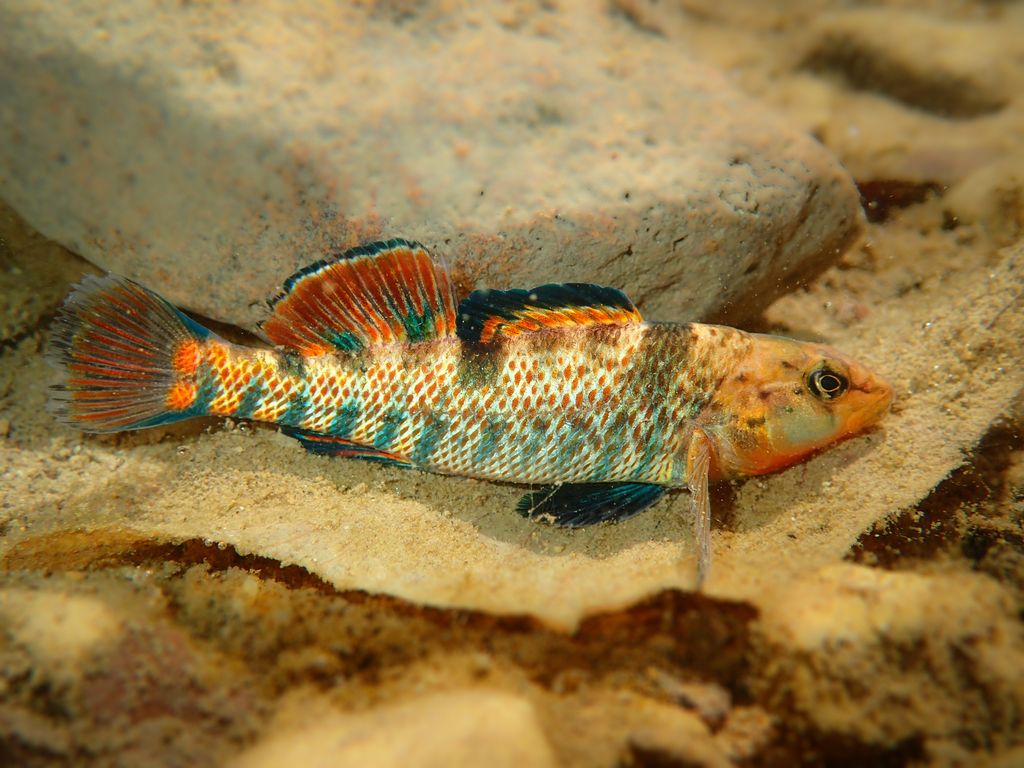
Darters (NSF 2020-2025)- Preferences, information theory, and the evolution of signal design (PI: T Mendelson & J Renoult)
|
 |
|
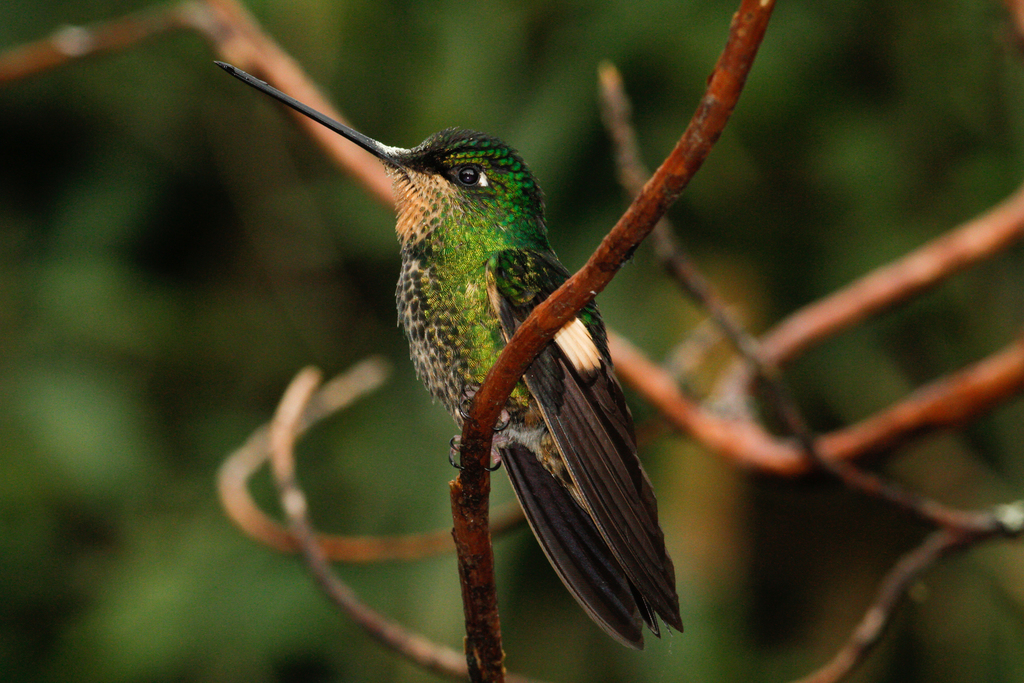
BIRDHABITAT-PATTERN (2025-2026) - AI for studying the role of habitat in the diversification of bird plumage color patterns. With Chris Cooney (Univ Sheffield), Maximilien Servajean (UMR LIRMM) & Jérome Pasquet (UMR TETIS). CNRS programm AISSAI.
|
 |
(* equal contribution)
GO DIRECTLY TO:
Visual ecology & evolution
Cognitive science/Computational neuroscience/Empirical Aesthetics
Marine biology
Others (mostly phylogenetics, population genetics and natural history)
----------------------------------------------
Visual ecology & evolution
RENOULT, J. P., KARPINSKI, R., SAUVADET, L., KREYER, M., MBADOUMOU, R., ROURA-TORRES, B., BANIEL, A, CHARPENTIER, M. J. E. (2025). Vision transformers for age prediction from facial images in a wild primate. Methods in Ecology and Evolution. https://doi.org/10.1111/2041-210X.70187
DIBOT, N. M., RENOULT*, J. P., & PUECH*, W. (2025). Generation and Editing of Mandrill Faces: Application to Sex Editing and Assessment. ACM Transactions on Multimedia Computing, Communications and Applications, 21(8), 1-23. [PDF]
SILVA, N.J., FERREIRA, A. C., SILVA, L. R., PERRET, S., TIEO, S., RENOULT, J. P., COVAS, R., DOUTRELANT, C. (2025). A deep learning approach to detect and visualise sexual dimorphism in monomorphic species. Animal Behaviour. 25: 123223.
ARIAS, M., BEHRENDT, L., DRESSLER, L., RAKA, A., PERRIER, C., ELIAS, M., GOMEZ, D., RENOULT, J.P., TEDORE, C. (2024). Testing the equivalency of human “predators” and deep neural networks in the detection of cryptic moths. Journal of Evolutionary Biology. 38, 214-224. https://doi.org/10.1093/jeb/voae146
HÉJJA-BRICHARD, Y. H., RAYMOND, M., CUTHILL, I. C., MENDELSON, T. C., & RENOULT, J. P. From natural to sexual selection: Revealing a hidden preference for camouflage patterns. bioRxiv, https://doi.org/10.1101/2023.09.27.559753
HÉJJA-BRICHARD, Y., MILLION, K., RENOULT, J. P.*, & MENDELSON, T. C.* (2024). Using neural style transfer to study the evolution of animal signal design: A case study in an ornamented fish. Ecological Informatics,https://doi.org/10.1016/j.ecoinf.2024.102881
HEJJA-BRICHARD, Y., RENOULT, J., & MENDELSON, T. (2024). Comparative analysis reveals assortative mate preferences in darters independent of sympatry and sex. Ecology & Evolution. 14(10), e11498.
TIEO, S., DEZEURE, J., CRYER, A., LEPOU, P., CHARPENTIER, M. J., & RENOULT, J. P. (2023). Social and sexual consequences of facial femininity in a non-human primate. Iscience, 26(10).
BYBEE, S.M., FUTAHASHI, R., RENOULT, J.P., SHARKEY, C., SIMON, S., SUVOROV, A., WELLENREUTHER, M. (2023). Transcriptomic insights into Odonata ecology and evolution. In Dragonflies and Damselflies, 2nd Ed. (CORDOBA-AGUILA, A., BEALTY, C.D., BRIED, J.T.). Oxford University Press. [Book chapter] [PDF]
CHARPENTIER, M.J.E, POIROTTE, C., ROURA-TORRES, B., AMBLARD-RAMBERT, P., WILLAUME, E., KAPPELER, P.M., ROUSSET, F., RENOULT, J.P. (2022) Mandrill mothers associate with infants who look like their own offspring using phenotype matching. Elife. 11, e79417
LANGLOIS, J., GUILHAUMON, F., BALETAUD, F., CASAJUS, N., […], RENOULT, J.P., […], MOUQUET, N. (2022). Global mismatch between the aesthetic value of reef fishes and their conservation priorities. Plos Biology. 20(6):e3001640.
HULSE S.V., RENOULT, J.P., MENDELSON T.M. (2022). Using deep neural networks to model similarity between visual patterns: application to fish sexual signals. Ecological Informatics. 67:101486 [PDF]
CHARPENTIER M.J., HARTE M., POIROTTE C., DE BELLEFON J.M., LAUBI B., KAPPELER P.M., RENOULT J.P. (2020). Same father, same face: deep-learning reveals paternally-derived signalling of kinship in a wild primate. Science Advances. 6, eaba3274. [PDF]
DUFOUR P., GUERRA CARANDE J., RENAUD J., RENOULT J.P., LAVERGNE S., CROCHET P.-A. (2020). Plumage colouration in gulls responds to their non-breeding climatic niche. Global Ecology and Biogeography. 29: 1704-1715. [PDF]
JOFFARD N., LE RONCE I., LANGLOIS A., RENOULT J.P., BUATOIS B., DORMONT L., & SCHATZ B. (2020). Floral trait differentiation in Anacamptis coriophora: phenotypic selection on scents, but not on colour. Journal of Evolutionary Biology. 33: 1028-1038.
BLIARD L., PAQUET M., ROBERT A., DUFOUR P.,
RENOULT J.P.,
GREGOIRE A., CROCHET P.-A., COVAS R., DOUTRELANT C. (2020). Examining the link between relaxed predation and bird colouration on islands. Biology Letters. 16: 20200002.
FERREIRA A.C., SILVA L.R., RENNA F., BRANDL H.B., RENOULT J.P., FARINE D.R., COVAS R., DOUTRELANT C. (2020). Deep learning-based methods for individual recognition in small birds. Methods in Ecology & Evolution. 11: 1072-1085.
DE SOLAN T., RENOULT J.P., GENIEZ P., DAVID P., & Crochet P.A. (2020). Looking for mimicry in a snake assemblage using deep learning. The American Naturalist. 196: 74-86. [PDF]
HULSE S.V., MENDELSON T.C.*, RENOULT J.P.*. (2020). Sexual signals of fish species mimic the spatial statistics of their habitat: evidence for processing bias in animal signal evolution. Nature Communications. 11: 1-8. [
RENOULT J.P., KELBER A., SCHAEFER H.M. (2017). Colour spaces in ecology and evolutionary biology. Biological Reviews. doi: 10.1111/brv.12230 [PDF]
BINKENSTEIN J., STANG M., RENOULT J.P., SCHAEFER H.M. (2017). Weak correlation of flower color and nectar-tube depth in temperate grassland. Journal of Plant Ecology. 10 : 397-405
DOUTRELANT C., PAQUET M., RENOULT J.P., GREGOIRE A., CROCHET P.-A., COVAS R. (2016). Worldwide patterns of bird colouration on islands. Ecology Letters. 19: 537-545.
RENOULT J.P., VALEUR B. (2015). Les couleurs de la vie – Mécanismes de production, fonctions et diversité. L’Actualité Chimique. 397-398 : 12-18.
RENOULT J.P., BLÜTHGEN N., BINKENSTEIN J., WEINER C.N., WERNER M., SCHAEFER H.M. 2015. Linking community to sensory ecology: the relative importance of color signaling for plant generalization in pollination networks. Oikos. 124: 347-354. [PDF]
RENOULT J.P., VALIDO P., JORDANO P., SCHAEFER M. (2014). Adaptation of flower and fruit colours to diversified mutualists. New Phytologist. 201: 678-686. [PDF]
RENOULT J.P., THOMANN M., SCHAEFER H.M., CHEPTOU P.-O. (2013). Selection on quantitative colour variation in Centaurea cyanus: the role of the pollinator’s visual system. Journal of Evolutionary Biology. 26: 2415-2427.
RENOULT J.P., COURTIOL A., SCHAEFER H.M. (2013). A novel framework to study colour signaling to multiple species. Functional Ecology. 27: 718-729. [PDF]
BINKENSTEIN J., RENOULT J.P., SCHAEFER H.M. (2013). Increasing land-use intensity decreases floral colour diversity and changes composition of plant communities in temperate grasslands. Oecologia, 173: 461-471.
RENOULT J.P., SCHAEFER H.M., SALLE B., CHARPENTIER M.J.E. (2011). The evolution of the multicoloured face of mandrills: insights from the perceptual space of colour vision. PlosOne, 6:e29117.
SCHATZ, B., DELLE-VEDOVE, R., RENOULT, J., et al. (2011). Couleur de fleur d’orchidées et insectes. Le Courrier de la Nature. 260 : 24-36.
RENOULT J.P, COURTIOL A., KJELLBERG F. (2010). When assumptions on visual system evolution matter: nestling colouration and parental visual performance in birds. Journal of Evolutionary Biology. 23:220-226
Cognitive science/Computational neuroscience/Empirical Aesthetics
MENDELSON, T. C.*, RENOULT, J. P.*, ROSENTHAL, G., SHUKER, D. On the biological basis of beauty. (2025) Biological Review.[PDF]
TIEO, S., BARDIN, M., BERTIN-JOHANNET, R., DIBOT, N., MENDELSON, T. C., PUECH, W., & RENOULT, J. P. (2024). Comparing activation typicality and sparsity in a deep CNN to predict facial beauty. Computational Brain & Behavior [PDF]
DIBOT, N. M., TIEO, S., MENDELSON, T. C., PUECH, W., & RENOULT, J. P. (2023). Sparsity in an artificial neural network predicts beauty: Towards a model of processing-based aesthetics. PLOS Computational Biology, 19(12), e1011703 [PDF]
TIEO, S., RESTREPO-ORTIZ, C. X., ROURA-TORRES, B., SAUVADET, L., HARTÉ, M., CHARPENTIER, M. J., & RENOULT, J. P. (2023). The Mandrillus Face Database: A portrait image database for individual and sex recognition, and age prediction in a non-human primate. Data in Brief, 47, 108939.
BELTZUNG, B., PELE, M., RENOULT, J.P., SUEUR, C. (2023). Deep learning for studying drawing behavior: A review. Frontiers in Psychology. 14: 992541.
BELTZUNG, B., PELE, M., RENOULT, J.P., SUEUR, C. (2022). Using artificial intelligence to analyze non-human drawings: A first step with Orangutan productions. Animals. 12(20): 2761. [PDF]
RENOULT, J.P. (2022). La Fluence, in Abécédaire de la beauté (éditeurs: ZERNIK, C. & JARICOT, J.). Editions B42. [Book chapter]
CHARPENTIER, M. J., PELÉ, M., RENOULT, J.P., SUEUR, C. (2021). Social data collection and analyses, in Demographic Methods Across the Tree of Life (ed. Salguero-Gomez, R., Gamelon, M.), pp.53-76 [Book chapter].
RENOULT J.P. (2019). Book review of "The Aesthetic Animal." Evolutionary Studies in Imaginative Culture. 3: 105-108. [PDF]
RENOULT J.P., GUYL B., MENDELSON T.C., PERCHER A., DORIGNAC J., GENIET F., MOLINO F. (2019). Modelling the Perception of Colour Patterns in Vertebrates with HMAX. bioRxiv, 552307.
HOLZLEITNER I.J., LEE A.J., HAHN A.C., KANDRIK M., BOVET J., RENOULT J.P.,... & JONES B.C. (2019). Comparing theory-driven and data-driven attractiveness models using images of real women’s faces. Journal of Experimental Psychology: Human Perception and Performance. 45: 1589.
RENOULT J.P., MENDELSON T.C. (2019). Processing bias: extending sensory drive to include efficacy and efficiency in information processing. Proceedings of the Royal Society B, 286: 20190165.
KAPOULA Z., VOLLE E., RENOULT J.P., ANDREATTA M. (ed.). (2018). Exploring Transdisciplinarity in Art and Sciences. Springer [Edited book].
RENOULT J.P. (2016). The evolution of aesthetics: a review of models. In Aesthetics and Neuroscience: Scientific and Artistic Perspectives, (KAPOULA Z. & VERNET M, ed.). pp. 271-300. Springer International Publishing. [Book chapter].
RENOULT J.P., BOVET J., RAYMOND M. (2016). Beauty is in the efficient coding of the beholder. Royal Society Open Science. DOI: 10.1098/rsos.160027. [PDF]
CHARPENTIER M.J.E., HUCHARD E., GIMENEZ, O., SALLE, B., KAPPELER P., RENOULT J.P. (2012). Distribution of affiliative behavior across kin classes and their fitness consequences in mandrills. Ethology, 118: 1198-1207.
Marine biology
KOVAČIĆ, M., SVENSEN, R., RENOULT, J. P., PATZNER, R. (2025). Checklist, key and latitudinal distribution of the eastern Atlantic marine gobies along the European coast (Actinopterygii: Gobiidae and Oxudercidae). Zootaxa. Zootaxa 5609 (1), 1-28.
KOVAČIĆ, M., BERGENGER, L., RENOULT, J. P. (2024). Testing of the taxonomic diagnosis of Zebrus pallaoroi Kovačić, Šanda & Vukić, 2021 (Actinopteri: Gobiiformes: Gobiidae) on a large sample from the Western Mediterranean. Fishes. 9, 511. [PDF]
MUCCIOLO, S., DESIDERATO, A., CHRISTIDIS, G., AMMAR, I. A., & ANTIT, M.,..., RENOULT, J.P., …, GEROVASILEIOU, V. (2024). New records of introduced species in the Mediterranean (August 2024). Mediterranean Marine Science, 25(2).
DIGENIS, M., AKYOL, O., BENOIT, L., BIEL-CABANELAS, M., ÇAMLIK, Ö. Y., CHARALAMPOUS, K.,... RENOULT, J.P., & GEROVASILEIOU, V. (2024). New records of rarely reported species in the Mediterranean Sea (March 2024). Mediterranean Marine Science, 25(1), 84-115. [PDF]
KOVACIC, M., ŠANDA, R., VUKIC, J., RENOULT, J. P., & FALZON, M.-A. (2023). New records of the recently described Pomatoschistus nanus Engin & Seyhan, 2017 (Teleostei: Gobiidae) (early view). Cybium. [PDF]
RENOULT, J., MENUT, T., RUFRAY, X., LE BRIS, S., IGLESIAS, S. P., LOUISY, P.,... & PRAT, M. (2023). Les poissons cryptobenthiques de la baie d’Agay (Var). Cahiers de la Fondation Biotope, 39, 58 pages.
KOVAČIĆ, M., RENOULT, J. P., PILLON, R., BILECENOGLU, M., TIRALONGO, F., BOGORODSKY, S. V.,... & YOKES, M. B. (2023). The delimitation of geographic distributions of Gobius bucchichi and Gobius incognitus (teleostei: Gobiidae). Journal of Marine Science and Engineering, 11(3), 516. [PDF]
KOVAČIĆ, M., PILLON, R., RENOULT, J.P. (2022). Identification of enigmatic Mediterranean fish Gobius ater Bellotti, 1988 (Teleostei: Gobiidae) based on morphology from underwater photographs. Journal of Fish Biology, 101: 1381-1384 [PDF]
RENOULT, J.P., PILLON, R., KOVAČIĆ, M., LOUISY, P. (2022). Frontiers in Fishwatching Series: Gobies of the Northestern Atlantic and the Mediterranean – Gobius and Thorogobius. Les cahiers de la fondation Biotope. 237 pages.
KOVAČIĆ, M., RENOULT, J.P., PILLON, R., SVENSEN, R., BOGORODSKY, S., ENGEN, S., LOUISY, P. (2022). Identification of Mediterranean marine gobies (Actinopterygii: Gobiidae) of continental shelf from photographs of in situ individuals. Zootaxa. 5144: 1-103.
IGLESIAS, S. P., BARICHE, M.., …, RENOULT, J.P., …, TOURNIER-BROER, R. (2021). French ichthyological records for 2019. Cybium. 45: 169-188.
SANTIN A., AGUILAR R., …, RENOULT J.P., …, TIRALONGO, F. (2021) New records of rare species in the Mediterranean Sea (March 2021). Mediterranean Marine Science, 22: 199-217.
IGLESIAS S. P., BERGOT P., …, RENOULT J.P., …, THOMAS W. (2020). French ichthyological records for 2018. Cybium. 44: 285-307.
Others (mostly phylogenetics, population genetics and natural history)
ROCHAS, P., MINOT, M., MEZIERE, N., RENOULT J.P., JUILLERAT, N., URIOT, Q., URIOT, S., FOXONET, H., CERDAN, A. (2022). Check-list of Odonata from French Guiana with notes on their distribution, ecology, and new state records. Odonatologica, 51(3/4) : 175-224.
RENOULT J.P., DELAHAIE B., DELATTRE J-C., DE FRANCESCHI C. , VEYRUNES F., LE BOT T. (2018). Chumming on multi-day sailing trip in Bay of Biscay. Dutch Birding40:96-98
CROCHET P.-A., LEBLOIS R., RENOULT J.P. (2015). New reptile records from Morocco and Western Sahara. Herpetology Notes. 8 : 583-588.
RENOULT, J.P. Arrivée de la Libellule purpurine Trithemis annulata (De Palisot de Beauvois, 1805) dans la vallée du Rhône. (2013). Sympetrum. 17: 81-82.
DURANT, E., RENOULT, J.P.(2012). Addition à l’odonatofaune de l’Adrar mauritanien. Poiretia, 2012, 4 : 7-16.
CHARPENTIER M.J.E., FONTAINE M.C., CHEREL E., RENOULT J.P., JENKINS T., BENOIT L., BARTHES N., ALBERTS SC, TUNG J. (2012). Genetic structure in a dynamic baboon hybrid zone corroborates behavioral observations in a hybrid population. Molecular Ecology, 21:715-731.
RENOULT J.P., GENIEZ P., BEDDEK M., CROCHET P.-A. (2010). An isolated population of Podarcis vaucheri (Sauria: Lacertidae) in south-eastern Spain: genetic data suggest human-mediated range expansion. Amphibia-Reptilia, 31:287-296.
KJELLEBERG F., BAKOLIMALALA R., EDMOND R., RAFIDISON V., RABEVOHITRA R., RENOULT J., et. al. (2010). Corridors de végétation et conservation d'un groupe clé de voûte de la biodiversité au centre d'un réseau d'interactions: le cas des Ficus et des communautés associées. in Connaissance et Gestion des Milieux Tropicaux. p80-91. CNRS Edition. [Chapitre de livre].
RENOULT J.P., GENIEZ P, BACQUET P., GUILLAUME C. P., CROCHET P.-A. (2010). Systematics of the Podarcis hispanicus-complex (Sauria, Lacertidae) II: the valid name of the north-eastern Spanish form. Zootaxa, 2500:58-68
RENOULT J. (2009). The Sooty Gull, Larus hemprichii (Aves; Laridae), on Nosy Ve: first records for Madagascar. Malagasy Nature, 2:174-176.
RENOULT J.P., GENIEZ P, BACQUET P., BENOIT L., CROCHET P.-A. (2009). Morphology and nuclear markers reveal extensive mitochondrial introgressions in the Iberian Wall Lizard species complex. Molecular Ecology. 18:4298-4315.
RENOULT J.P., KJELLBERG F., SANTONI S., KHADARI B. (2009). Cyto-nuclear discordance in the phylogeny of Ficus section Galoglychia and host shifts in plant-pollinator associations. BMC Evolutionary Biology. 9:248.
RENOULT J.P. & RASELIMANANA A.P. (2009). A new species of Malagasy blind snake of the genus Typhlops Oppel (Serpentes: Typhlopidae). Zootaxa,2290:65-68
CROCHET P.-A., RENOULT J. (2008). Tarentola annularis annularis (Geoffroy de Saint-Hilaire, 1827) preying on a mammal. Herpetology Notes, 1:58-59.
x


 HAL CEFE